
Last month [Part I], we talked about figuring out which motorcycle you want and need. You've done all your research, talked to all your friends, and read all the message boards and FAQs online. You have your money, or at least your credit is sufficient to allow you your purchase. Now you just have to find your motorcycle. Just like finding your true love, your motorcycle is out there, waiting for you, and now you're going to find it, right? This is easy. I mean, it's easy to find your favorite brand of razors or dish soap, so you just walk on down to the motorcycle shop and buy it, right?
Well, we wish. The problem is that we motorcycle folks are thrifty types who like to feel we got the best deal. But is that buying new from a dealer, used from a dealer, used from a private party, or even a salvage title? Let's look at these different ways of finding our new true love.
Just like finding your true love, your motorcycle is out there, waiting for you, and now you're going to find it, right?
Saved From the Dead: Buying a Salvaged Bike

Like Lazarus, salvage title motorcycles are those which have been crashed and purchased from the owners by a salvage yard or insurance company. When this happens, the vehicle is declared a "total loss" by the state's DMV and has the title taken away- legally reducing the vehicle to an assemblage of spare parts, not to be ridden on public roads.
What that means is that the next owner has to create a new title for the vehicle, which will be marked as "salvage" by most state DMVs. Some states allow the title to be resurrected as "clean" after some kind of inspection, but most states, like California, don't. The motorcycle is forever marked as a salvage title vehicle, which seriously affects the value.
All a "total loss" means is that the cost to fix the damage would exceed the value (or sometimes, less than 1/2 the value) of the motorcycle. For a late-model sportbike, a "total loss" can be declared by an overworked insurance adjuster glancing at superficial damage caused by a low-speed low-side. I've seen salvage bikes with plenty of scuffing but still 100% safe and drivable. 
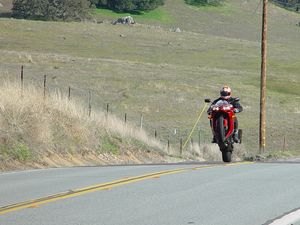
I got into a Honda CBR600F4i with 2500 miles on it for $2800, or about 1/2 it's actual value. Sure, it needed instruments and a fairing, but I got all that stuff off of eBay for about $400. It's not pretty, but it beats walking- or paying $6000 for a clean titled used motorcycle.
Sometimes, though, there can be hidden problems the salvage yard knows nothing of. There's lots of "squids"- reckless, know-nothing pinheads- purchasing sportbikes brand-new to practice their stunting and street racing or God-knows-what. Sometimes the damage isn't apparent on the quick around-the-block type test ride most of us do, so really be careful here! Transmission damage makes a cheap sportbike completely unaffordable. These people mash gearboxes into oblivion and ignore maintenance, so test ride the bike or bring a mechanic with you before you buy one of these!
A note about gearboxes: sportbikes are designed to be light and easy to shift, so the transmission components, like shift forks and dogs are lightweight and easy to damage. Sometimes the damage isn't apparent on the quick around-the-block type test ride most of us do, so really be careful here! Transmission damage makes a cheap sportbike completely unaffordable.
Another factor to consider when purchasing a salvage motorcycle is titling it. Please be sure to research registering a salvage motorcycle before you buy. Your state might have such a draconian procedure to resurrect title that it might be more sensible to buy a clean titled bike. There might be expensive parts required to pass a safety check that aren't available used. Or, most importantly, your insurance company might not insure your Frankenstein's monster at all.
You really can save money and get a good motorcycle buying salvage, but it's easy to get fleeced, too. Salvage yard owners tend to be a little less customer-service oriented than motorcycle dealers (but I know there are exceptions, so please don't take offense!) and might take advantage of an uneducated seller with a big wad of cash. The bottom line is the same as making any other kind of purchase, only more so: do your research and be especially wary.
Second Hand Rose: Buying Pre-Owned from a Private Seller
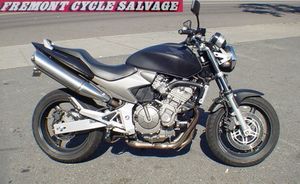
Buying used from a private seller can be an amazing way to save some big bucks, but you can also get royally screwed. I've had it both ways. (Shut up, Sean!)
The best advice I can think of about buying used from a private seller is this: make condition more important to you than price! It's rare for two identical year and model motorcycles to be more than $1000 apart in price, and that $1000 gets eaten up quickly by tires, ($400) chain and sprockets, ($300), steering head bearings, ($100), or just a good old-fashioned tune-up ($400+). I was besieged at the shop I worked at in San Francisco's inner city by customers looking for the $1000 motorcycle they would fix on the installment plan. That's not such a sound plan, economically. They would wind up dumping hundreds, even thousands of dollars into their 1980's zombie-bikes, and what would be the fruit of their labors? A $1000 motorcycle they spent $3000 on. It's better to buy a sound bike that only requires inexpensive routine maintenance than a Courtney Love-like beast that needs to have everything replaced.
There are some great websites with tons of technical information about inspecting used bikes, and you should check them out. If you have a choice, you should lean towards buying from a reputable, older person with some obvious standing in their community. They should appear stable, with a nice, clean garage. Avoid thin, pale people in black clothes with bad teeth unless you're in England. You should write a contract with a full understanding of all the terms of the deal.
Take the bike to a mechanic before you buy.
Take it to a shop that doesn't carry the brand you're interested in (unless the mechanic doesn't know how to work on that brand!): the shop might tell you the bike you're checking sucks so you'll buy a new one. This is usually a pretty big hassle, especially if you're considering a lot of different motorcycles. Ask the seller if he'll share the expense with you, or at least if he'll meet you at the motorcycle shop. His or her response will give you an idea of how trustworthy of straightforward they are.

.jpg)
If taking the bike to a mechanic is impossible, learn how to do some basic checks yourself.
There's a terrific resource for pre-purchase inspections here. If it looks lengthy and intimidating to you, you might want to spend the extra $2000 or so for a new bike! Buying new is worth every penny, if you can afford it. But many of us can't, or we just love the thrill of saving the extra money.
Write a checklist of items to inspect. Most importantly, you want to get an overall sense of a motorcycle that is clean and well cared-for. I just sold a 1993 Honda Shadow 600 that looked and ran like a brand-new bike. That's the kind of bike you want. Rather than focusing on price, mileage or year, look at the owner and how she cares for her possessions. A 300-point checklist is great, but you will find that after looking at five or 10 items, you will have a good idea whether the bike is worth buying. 
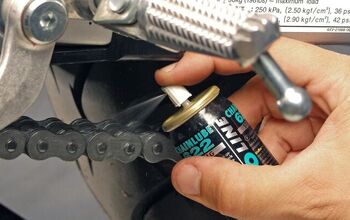
Basic maintenance is key. Is the chain lubed or dry? Loose or tight? Shiny or rusty? Is the engine oil clean or dirty? Has the air filter been changed lately? Is the bike clean like a clean bike, or clean like a bike that just got a detailing? Are there scratches all over, or just from one tip-over? Are the tires bargain bin specials or tires you would want to actually ride on?
Speaking of tires, they really do tell you a lot about the seller. Learn how to read tire codes! If the tires are over five years old, find out why, and add the cost of new ones to the price you will pay for the bike! The same goes for tune-ups, chain-and-sprockets, and other wear items.
Reading Tires Dates
Reading the date on your tire is very easy once you learn it, and is very impressive to laymen. It can actually save your life, especially if you are buying a used bike, or getting tires mail-order.
It's simple: the date is final three or four-digit code stamped into the small oval area on the sidewall after the word DOT. The first two digits are the week of the year, and the last two digits are the last two numbers of the year. If it was made before 2000, it's just the last digit of the year, hence a three-digit number.
For instance, 1202 is the twelfth week of 2002: the last week of March. 109 is the tenth week of 1999, or possibly 1989. You should be able to figure out if the tire is a 1990's tire or a 1980's tire by brand and model, although Metzler has been making ME33's since about 1874. Don't worry about the tire being from the 60's or 70's: they didn't start using the code until sometime in the 80's. If you are wondering whether or not to keep a 1970's tire you should abandon motorcycling for something safe, like model yacht racing or breeding pot-bellied pigs in your tub. Of course, you have nothing to loose making a lowball offer on the motorcycle, as long as you do it with good humor and respect.
Now that you know how to read tire dates, you can pick the freshest tires at the motorcycle shop, or send stale tires back to the mail-order warehouses like a wine snob at the Olive Garden. You will briefly impress your friends when you tell them how old their tires are, and then become annoying.
So now we know the motorcycle is worth buying. How do we put the squeeze on the seller so we can get it cheaper?
An inexperienced and desperate seller will quickly reduce his price to make you happy and buy. A more experienced and less desperate one will be tougher to get concessions from. But is the bike worth the price? Will somebody else grab it first if you "think it over"? Remember, condition is more important than price. If you spend $500 too much, your regret will disappear as soon as you have another $500. If you save $500 by purchasing a lemon, you'll regret it every time you ride or even look at your bike. The regret will last until you sell the stupid thing to some other idiot.
Don't turn this into a battle of wills. If you want to beat the seller at something, challenge him to some one-on-one basketball. Chances are he has a hoop nailed up over his garage. But if he has a very nice motorcycle at a fair price, snap it up.
Of course, you have nothing to loose making a lowball offer on the motorcycle, as long as you do it with good humor and respect. Don't make it so much lower than your maximum price that you will look like a jerk when you do pop the extra $1000 out of your back pocket after you told the seller that you had to dip into your retirement fund to scrape up $3800. But sometimes people list a price way higher than what they really want to get for a bike. That's why it's a good idea to be educated: know what that year and model is selling for in your area. Sure, Honda Hawks sell for $1,500 in Alabama, but you're in San Francisco, so you pay more. If you don't like it, live in Alabama. See how you like that! (And you might: Alabama is a great place to live. If you're a banjo. I'm kidding. Banjos warp from the humidity.*) 
Once you've agreed on a price, write a contract in clear, simple language if there's anything you and the seller have promised each other. Make sure each of you has a signed copy. Then, make sure all the paperwork is in order. Double and triple check the VIN and engine numbers- errors here can cause headaches with your DMV! Find out if there's any extended warranty or service plan. Make sure there is no lien on the bike, or that you have all the pay-off information if there is one.
You should have a good feeling about this whole transaction by now. I think buying used from a private party is a very satisfying way to buy a bike. You can save a bundle of money and make a good riding buddy. Be prepared to spend a little more than you'd like, be willing to travel a hundred miles or more, and make sure you look at a few bikes before you buy. And don't worry: if it's right, you'll know it's right, and don't be afraid to walk away from the deal that makes you uneasy.
Next: The belly of the beast: buying from a dealer.
* Seriously, I am kidding. Alabama is a great state, filled with very nice people, excepting the ones who are at this moment e-mailing me error-ridden homophobic hate mail. Don't worry, next week I'll make fun of Rhode Island.