


Motorcycle Helmet Safety Ratings Explained

What do all those letters and numbers mean, anyway?

Walk into any motorcycle shop and you’ll likely see a wall full of helmets for sale. Obviously a helmet is a vital piece of safety gear you that shouldn’t skimp out on, but which one should you pick? Beyond deciding on the graphic you like and making sure the fit is correct, the main consideration should be which safety rating the helmet meets. But this can be tricky – rookies and veterans alike can have a hard time wrapping their heads around the different ratings. And what do they even mean, anyway? It turns out, they mean a lot. It’s literally the difference between a potentially life-saving device and a decoration. Understanding motorcycle helmet safety ratings is crucial for riders. These ratings indicate that a helmet has passed certain tests and meets specific safety standards. Here's a breakdown of what those ratings mean.
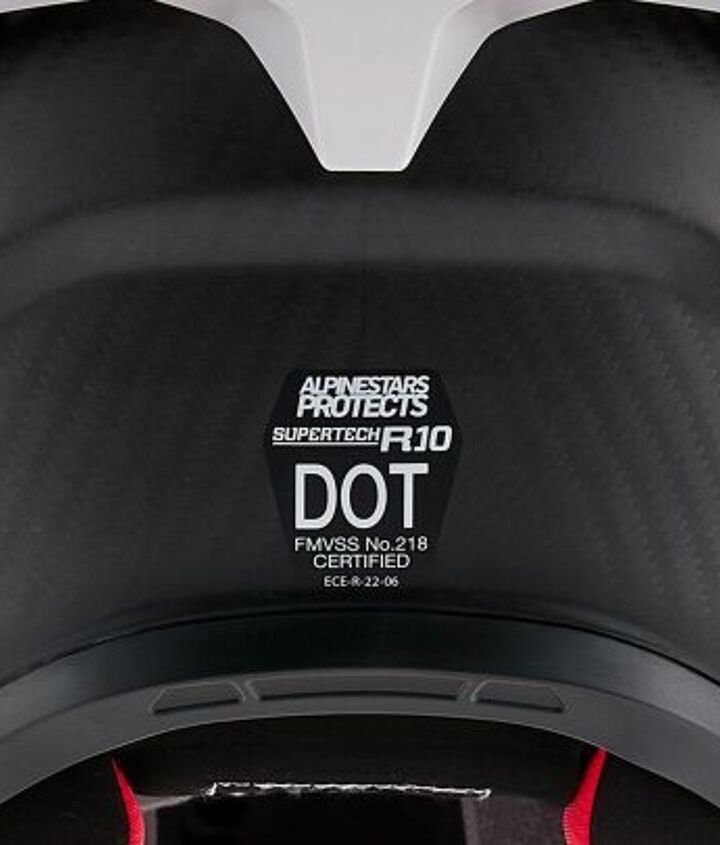
DOT (Department of Transportation)
The DOT rating is the baseline safety standard for motorcycle helmets in the United States.
- All helmets sold in the US must meet DOT standards, as defined by the Federal Motor Vehicle Safety Standards (FMVSS) 218.
- DOT certification means the helmet meets minimum requirements for impact resistance, penetration, and retention.
- More specifically, this means the helmet must have chin straps that are strongly attached to ensure the helmet stays on in a crash.
- It must have an inner liner that’s at least 0.75-inch thick, usually made from polystyrene foam.
- The visor must provide a minimum of 105º of peripheral vision.
- Peak acceleration transferred to the head during impact must not exceed 400Gs, and the period of time which an acceleration pulse exceeds 200Gs can’t be longer than two milliseconds, nor can the period of time when a pulse exceeds 150Gs be longer than four milliseconds.
- The DOT sticker is typically found on the back of the helmet. However, be cautious – there are many novelty helmets with fake DOT stickers (or no stickers at all) that are nothing more than head coverings and certainly won’t protect you in an impact.
- DOT “certification” relies on random testing after a helmet is already on the market and self-certification, which opens the door for counterfeit “DOT approved” helmets to make it to shops.
Promoted Product: RUROC AT4.0 Track
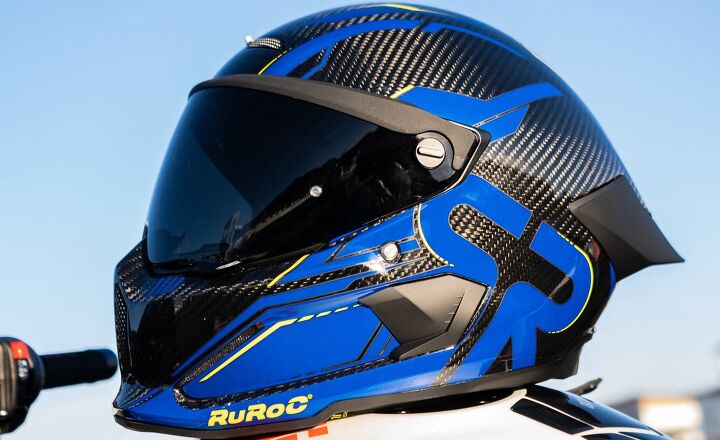
Take your track day to the next level with the RUROC AT4.0 Track. RUROC shaved 10% of the weight off the previous model thanks to changes to the smooth carbon shell to turn this helmet into a track day weapon.
Boasting ACU Gold, DOT and ECE 22.06 certification, the AT4.0 Track is built to protect you know matter where you ride. It is lined with industry leading RHEON protection technology, which helps control both direct and rotational forces by reactively stiffening upon impact. This is designed to reduce energy passed through and into the rider’s head.
Helping to even airflow across the helmet and rider is an extended rear spoiler. Additionally, new capped side vents are designed to reduce shuddering when coming out of a tucked position to help keep your head steady.
RUROC added a rubber seal on top of the visor to help cut down on unwanted drafts that can cause moisture to from. And with 215 degrees of peripheral vision and 100 degrees vertically, you’ll be able to clearly see every part of the track ahead.
The RUROC AT4.0 Track is compatible with the Shockwave Bluetooth sound system.
ECE (Economic Commission for Europe)
As the name implies, the ECE 22.05 (or the newer 22.06) rating is a European standard, but it’s widely recognized worldwide.
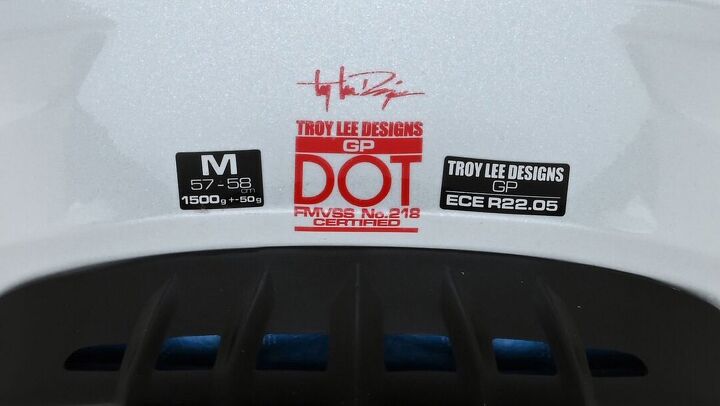
- ECE certification is common in Europe and many other countries worldwide.
- ECE standards often include more rigorous testing than DOT.
- Helmets with ECE certification are generally considered to offer a high level of protection. This is because the ECE incorporates more realistic testing scenarios, like testing for abrasion resistance, chin strap strength, and impact testing on various anvils.
- There are also tests for face shield penetration, optical quality, and more.
- ECE 22.05 also requires each helmet model get tested before being sold on the market to ensure quality and safety.
- ECE 22.06 was implemented at the end of 2023 and incorporates more rigorous testing. This includes testing at more impact points, with an expanded range of speeds.
- Crucially, there is now a rotational acceleration test to help mitigate brain injuries like CTE.
- The helmet retention system is also tested more thoroughly as well, to simulate more real-world scenarios.
Snell
The Snell Memorial Foundation is a private, non-profit organization that tests and certifies helmets. Snell has two certification standards: M2020 and M2020R.
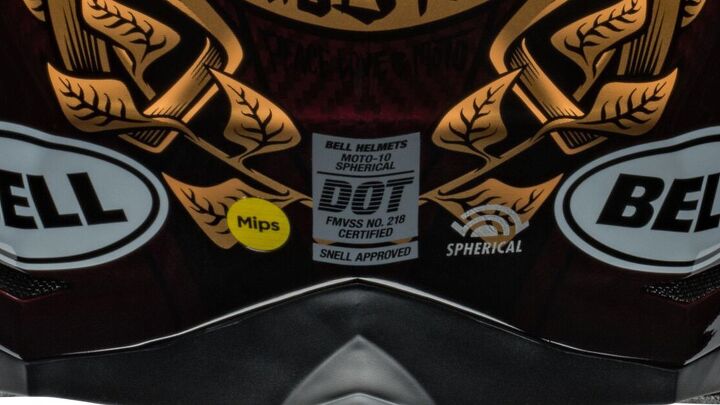
- Snell certifications are voluntary and often seen as an additional layer of safety assurance.
- Snell tests are typically more demanding than DOT or ECE tests and include impact testing over various surfaces, at different speeds. Each time the absorption capability is measured.
- Snell also includes retention strap performance using heavier weights than DOT testing.
- Penetration testing is also done, and so is a fit test, chin bar test, and faceshield penetration test.
- The M2020R standard is more closely aligned with ECE 22.05, with more similar testing for helmets sold in Europe.
There’s debate out there about which standard is better than another, but that’s not the scope of what this article is about. Always check for the certification stickers (and date of manufacture stickers) inside or on the back of the helmet, because no matter which camp riders fall on regarding safety standards, we can all agree that a helmet that meets even the least stringent standards is better than one that doesn’t.
We are committed to finding, researching, and recommending the best products. We earn commissions from purchases you make using the retail links in our product reviews. Learn more about how this works.
Become a Motorcycle.com insider. Get the latest motorcycle news first by subscribing to our newsletter here.
Troy's been riding motorcycles and writing about them since 2006, getting his start at Rider Magazine. From there, he moved to Sport Rider Magazine before finally landing at Motorcycle.com in 2011. A lifelong gearhead who didn't fully immerse himself in motorcycles until his teenage years, Troy's interests have always been in technology, performance, and going fast. Naturally, racing was the perfect avenue to combine all three. Troy has been racing nearly as long as he's been riding and has competed at the AMA national level. He's also won multiple club races throughout the country, culminating in a Utah Sport Bike Association championship in 2011. He has been invited as a guest instructor for the Yamaha Champions Riding School, and when he's not out riding, he's either wrenching on bikes or watching MotoGP.
More by Troy Siahaan







Comments
Join the conversation
In 1975 I took a spill off of my Norton Commando 750 at 60 miles an hour. I was wearing a Bell 3/4 helmet that was shaved right down to styrofoam lining. I would not be writing this is it wasn’t for that helmet.
I bought my first helmet in 1968. It was Snell certified. Every helmet since has been a Snell certified helmet. They might cost more but they are tested way more than any other rating.