Motorcycle.com
LOS ANGELES, December, 1997 -- You've got to start somewhere. And just as new pilots aren't strapping themselves into multi-engine jets, beginning riders are ill-advised to start their career with their legs wrapped around a GSX-R750 or a Gold Wing.
New riders need to get a feel for it all: The wind, the road, the speed. But it's got to be fun, too, and while you're learning the intricacies of choosing a line through a decreasing radius turn, or just learning to stay the hell out of the way of the insipid nut who's changing lanes right into you, you still want a bike that reflects your personality, accommodates your riding habits and will help
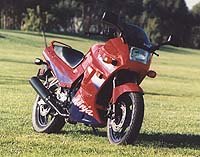
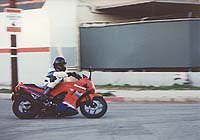
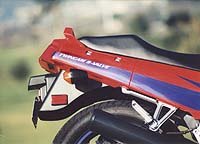
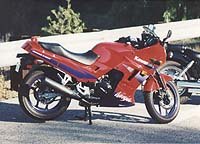
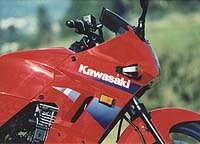
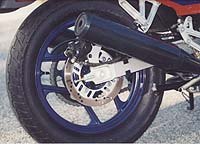
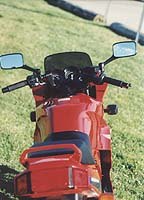
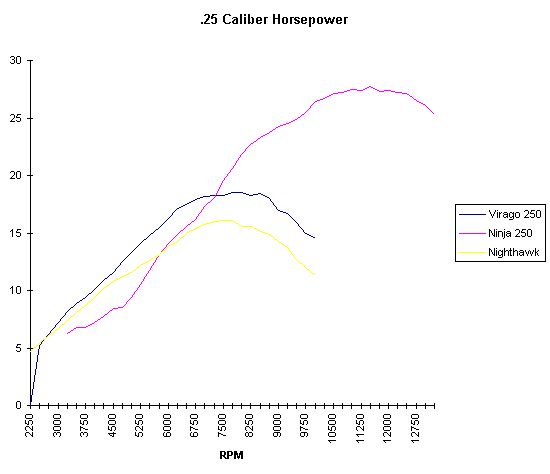
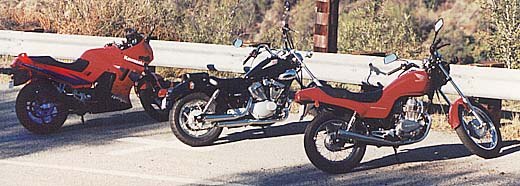
The Ninja is driven by a 248cc liquid-cooled parallel twin. The short 41.2mm stroke is reflected in the 14,000 rpm redline that is indicated on the only tach present among the three bikes. With dual-disc brakes, a compliant suspension, and a six-speed gearbox shifting through a reasonably good power curve, the smallest Ninja of the family just barely edged out the Virago in our test.
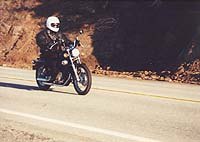
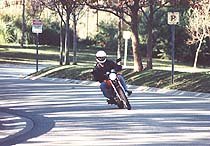
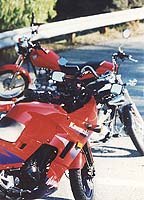
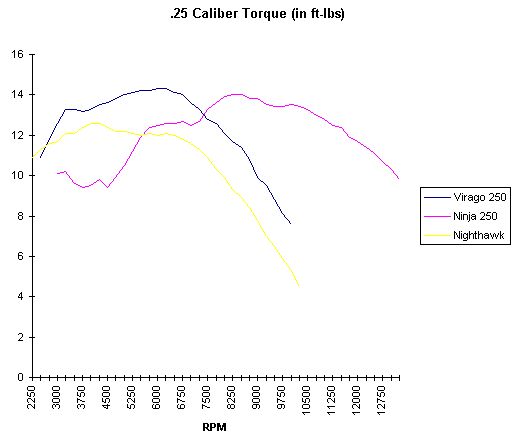
There were perhaps a few other surprises, not quite as welcome. Low to mid-rpm carburetion was glitchy at best and the bike was at times a little unsettled when driven deep into the corners. Where the Virago's perceived power delivery was in a nice smooth curve, the Ninja was marred with uneven and sluggish off-idle power until about 5,000 rpm where things started to smooth out a bit. Furthermore, drive lash on this bike was quite significant, and while it could be argued that it would encourage newbies to learn smooth throttle control, the overall effect was rather unpleasant, and a sudden throttle change in a turn (not unreasonable to expect for a new rider) could be an unsettling sensation indeed, despite the rather soft suspension set-up.
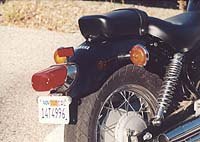
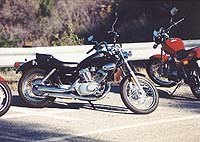
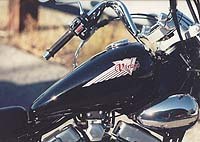
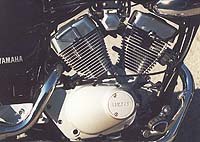
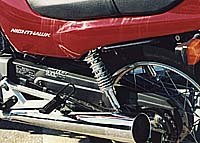
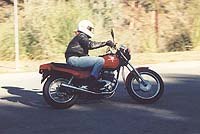
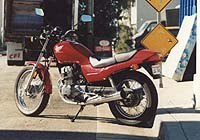
The Virago suffered no such nonsense, simply responding as expected to minute throttle adjustments, flicking nicely into the corners and offering a ride that, although soft, was pretty much exactly what you'd want from a cruiser. Ground clearance wasn't great and scraping pegs wasn't difficult, but then this is a cruiser and wasn't out of character.Our Nighthawk was, well, again, the least fun of the three.
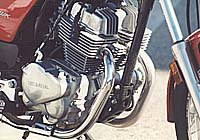
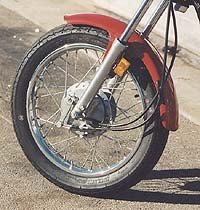
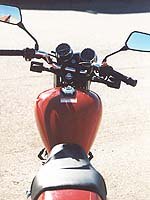
With what seemed like zero front end dampening and springs at both ends that were much too soft, flying through the kinks in the road became more a matter of slowing the hell down and just cruising, nice and easy. Except that it isn't a cruiser and there is a zero cool factor. The Honda also suffered from a great gaping lag on the throttle coming off idle, and a very uneven idle at that. We just couldn't see this little standard beckoning to the beginner for that Sunday morning out on the road. It was no fun in the turns and offered none of the general do-it-all capability that a standard should. And where the Virago sported a single disc up front and the Ninja had discs front and back, the Honda had that darn front drum brake. Braking was okay on the Nighthawk, but given Honda's reputation for details, we would like to see them at least pretend they cared.
The choice for us was clearly between the Ninja and the Virago, and we did come to a split. We were all impressed by the Virago's refinement, not only in the quality of the feel but also in the appearance and quality of the fit and finish. It not only accepted its cruiser role, but it fulfilled it very nicely, with no apologies for displacement. Unfortunately, it also did so with no apologies for price, and this is where the Ninja made up for its shortcomings. The cheapest of the three, the Ninja offered true sportbike capability and styling along with a good fit and finish, lots of little features like bungee hooks, centerstand, a tachometer, front and rear disc brakes and an all-around fun time. Of course, given the disparity of styling a choice between the two might come down to simple riding preference, sport or cruising, and either choice would give a novice a good platform to grow on and, most importantly, avoid that aforementioned nut inviting himself into your lane.
Impressions:1. Billy Bartels, Associate Editor
That said, I pick the Virago, despite the price, as the best beginner bike here; followed by the Ninja. The Virago will teach a beginner how to ride a cruiser better than the Ninja will teach sportbike riding. It's a well put together motorcycle, and shouldn't be ignored.
2. Mark Hammond, Managing Editor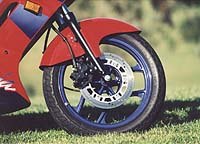
3. Greg McClure, Assistant Editor
If you have an unreasonably titanic stack of papers, $3,400 that you have no idea how to spend, and no ordinary paperweight will do, buy the Nighthawk. It's light enough to move easily but heavy enough to hold down almost any pile of correspondence, documents, etc.
1997 Ninja 250R
Manufacturer: KawasakiModel: 1997 Ninja 250RPrice: ,999.00Engine: dohc, 8-valve, inline-TwinBore and Stroke: 62.0mm x 41.2mmDisplacement: 248ccCarburetion: (2) 30mm KeihinTransmission: 6 speedWheelbase: 55.1 inSeat Height: 29.3 inFuel Capacity: 4.8 galClaimed Dry Weight: 304 lbs
Yamaha Virago 250
Specifications
Manufacturer: YamahaModel: 1997 Virago 250Price: ,999.00Engine: sohc, 2-valve, V-twinBore and Stroke: 49mm x 66mmDisplacement: 249ccCarburetion: (2) 26mm MikuniTransmission: 5 speedWheelbase: 58.7 inSeat Height: 27 inFuel Capacity: 2.5 galClaimed Dry Weight: 301 lbs
Specifications
Manufacturer: HondaModel: 1997 Honda CB250 NighthawkPrice: ,399.00Engine: sohc, 2-valve, vertical twinBore and Stroke: 53mm x 53mmDisplacement: 234ccCarburetion: 26mm KeihinTransmission: 5 speedWheelbase: 55.3 inSeat Height: 29.3 inFuel Capacity: 4.3 galClaimed Dry Weight: 286 lbs

Motorcycle.com presents an unrivaled combination of bike reviews and news written by industry experts
More by Motorcycle.com Staff





Comments
Join the conversation