2006 Open Superbike Shootout

Honda CBR 1000RR : Kawasaki ZX-10R : Suzuki GSX-R1000 : Yamaha YZF R1

story by MO Staff, Photograph by Fonzie, Created Mar. 15, 2006
BACK TO THE ARTICLE PRINT
Buttonwillow Raceway Park, CA -- Do you ever get the feeling you've done something before? We here at MO test a lot of different bikes, and sometimes we'll test the same model again by mistake. But we rarely do a test where the same four bikes get tested against each other twice in the space of a year.

However, here we are, testing two 2006s that are virtually the same as the 2005s, and two bikes that have supposedly been heavily revised by their manufacturers, but which look substantially the same. Maybe we could get away with not testing them this year? Maybe we could just change a few words around from last year's shootout and go have lunch? In the end, our interest in journalistic integrity won out, and we We're just going to grab a quick taco, and then we'll be right with you. had already ordered the bikes and track time anyway. 
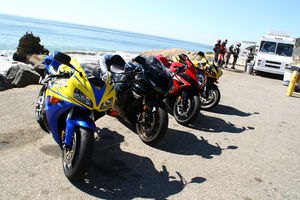
MO's Publisher Sean "Dirty" Alexander, who had recently returned from the Kawasaki ZX-10R introduction, was convinced the Ninja would win. "It's as user-friendly as the Honda was last year, but with all the power and speed from last year's ZX-10R." It sounded like a winning combination to us, and since the Honda sounded like it had changed for the worse, according to Sean's intro report, and the other two models reported just a few changes, we figured the ZX-10R would emerge as the winner. As outstanding as the GSX-R was in our 2005 Shootout, it sounded like the bar had been raised -- once again -- by Kawasaki's engineers. 

The reality surprised us a bit. We're back from two days on the road, a long trackday where we put over 200 miles on each bike, multiple dyno runs and some healthy arguments about which bike is best. We've come up with some pretty interesting results that anybody who either presently owns or is considering the purchase of an open-class sportbike should read. Although it looks like this is "2005 Open Sportbike Shootout: The Rematch", two of these bikes have been significantly revised to have another shot at the crown. The effects of those revisions made this a fun test to do and should prove illuminating to you, the MO reader. Feel better about spending an hour away from work? Read on, MOridian!
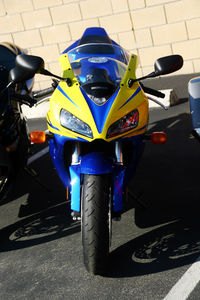
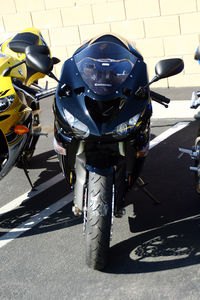
[CBR] [ZX-10R] [GSX-R] [R1]


The Contenders

We're still waiting to hear from the Shriners about joining their precision driving team. Last year's Open Sportbike Shootout winner -- the Suzuki GSX-R 1000 -- was almost the universal pick of motorcycle magazines and websites globally. This dominance -- plus the GSX-R's success in AMA and World Superbike racing -- prompted the other manufacturers to revise their 1000cc machines to grab that title.

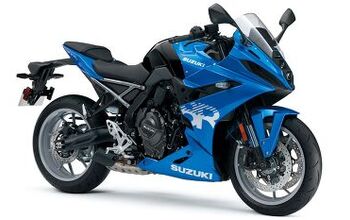
Suzuki's GSX-R 1000 is the only one of the four bikes to be unchanged (except for graphics) for 2006. The Yamaha had just a few revisions, while the Kawasaki ZX-10R and the Honda CBR1000RR were almost completely revamped. Would these improvements be enough to rival the Suzuki? Or would they just alienate their fan base by altering their characters? Let's look at each bike a little closer so we know what we're dealing with.

Last Year's Winner: Suzuki GSX-R 1000

We've gone over the tech of the GSX-R in some detail in both the 2005 Open Super Sport Shootout and our 2005 Best of the Best Shootout, where we pitted it against our 2005 600cc winner, the Yamaha YZF-R6. For those of you who can't get enough technical information in your life, here's what makes this bike one of the greatest ever built.
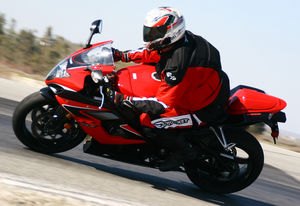
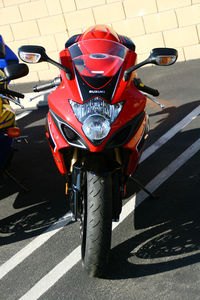
This is Dale in a rare moment of color-coordination. The Suzuki GSX-R 1000 is the result of a total redesign for the 2005 model year. Suzuki's engineers had the goal of making the lightest, fastest, best handling bike they possibly could, while still retaining the rider-friendliness and ease-of-maintenance that a good streetbike requires.

The frame needed to be roughly the same dimensions as the 600 and 750 models that inevitably follow a GSX-R 1000's redesign, so the cast and extruded twin-beam unit is extremely compact. It uses a heavily-braced swingarm and a linkage rear suspension to hold the rear 190/50-17 Bridgestone tire just 55.3 inches from the front wheel, which is suspended from the massive steering head by a pair of fully-adjustable upside down forks.

A superbike is all about motor, and the Suzuki doesn't disappoint. It uses a liquid-cooled, inline-four powerplant with four valves per cylinder opened and shut by dual overhead camshafts. Bore and stroke figures are heavily over-square at 73.4 by 59 mm, compressing fuel and air from the eight 52 mm fuel injectors (two per throttle body) to a 12.5:1 ratio. There's no changes evident from the outside, but something happened inside that motor this year; our dyno run revealed a bike making 161 hp and 81 foot-pounds of torque, compared to last year's bike, which made a mere 158 hp and 78 foot-pounds. How did we stand it?

Top-of-the-line components and build quality complete this 365 pounds (claimed dry weight) ...here's what makes this bike one of the greatest ever built.package. Radial-mount four-piston calipers clamp 310mm front brake discs, powered by a radially-actuated master cylinder. A bleed screw on top is a nice touch that will be appreciated by those who do their own maintenance. The sleek bodywork includes a sexy solo seat cover, all for the paltry asking price of $10,999.

Deflation and the Big-Bore Sportbike

"Paltry asking price?"

I have a nerve writing that, huh? After all, $11,000 for a motorcycle is an awful lot of money. Since the average age of an American motorcycle consumer is somewhere well north of 45, there are many of you reading this that can remember buying perfectly good, top-of-the-line sportbikes for three, four or five thousand bucks.
I'll pay you $5,500 in 1978 dollars... However, there are two things to take into account when figuring the relative value of motorcycles. The first is the incredible advances in technology over the last three decades. The second is the actual value of the money you spend and earn in current dollars.

Friends, each one of the bikes we're testing here makes over 150 hp at the rear wheel, a figure unobtainable in anything except a full-blown Grand Prix race bike just 20 years ago. In fact, the Kawasaki ZX-10R makes 166 hp, which is more than any AMA superbike made until pretty recently. And it comes with a warranty, runs on pump gas, and is smooth and tractable enough to cruise around town on.

Oh, and there's fuel injection, computerized digital ignition, a passenger seat, a built-in lap timer and a valve adjustment interval longer than the life span of your average 1970s UJM cylinder head. The tires have more grip (and much longer life) than the most expensive road racing slicks from the early 1990s, and the clutch pull is as feathery-light and sensitive as a 125 cc motocross bike. Ten years ago a lavishly-built custom sportbike with those kinds of specifications would cost many tens of thousands of dollars; now you can walk into a motorcycle showroom and haggle the price under 10 grand if you're happy with last year's model. You'll probably get a free helmet, too.

Also, 11 large now isn't what 11 large was a decade ago. Correcting for inflation, we can see what a big-bore sportbike cost in real dollars back in the mid-Nineties:

1998 Kawasaki ZX-9R: $12,164
1998 Honda CBR900RR: $12,164
1998 Yamaha YZF-R1: $11,818
1997 Suzuki GSX-R 1100: $12,254
Adjusting for inflation, by 2016 a night with Pete will cost over $75. For a cool thousand dollars less than a 1998 ZX-9R, a ZX-10R adds 37 hp and loses 20 pounds. For any number of reasons, the Japanese factories have decided to keep the prices of their flagship sportbikes more or less constant, while the price of cutting-edge 600 cc sportbikes actually has kept ahead of inflation.

I'm no economist, so I don't have any coherent theories as to why this is. I do know that wages for working-class Americans has declined, while prices for many things, like insurance, education, and housing, have increased in relation to the value of current dollars even while the relative prices of durable goods like computers, TVs and cars have declined. Whether this is the result of Democrats, Republicans, the IMF, the Tri-Lateral commission, Zoroastrianism, or Mel Torme is a matter I'll leave to our cast of know-it-all blowhards in the discussion forum.

I'd rather start saving my money for a 2016 ZX-10R. If things keep going the same way, it'll weigh 325 pounds dry, make 210 hp at the back wheel and still only cost $11,000. -- Gabe

Last year, we found the GSX-R to be light, powerful, easy to manage and comfortable for everyday riding, not to mention the fastest bike on the track. Is that standard high enough to keep it on top? It's a tough one to beat.

Back From the Fat Farm: Honda CBR1000RR

Last year's Honda CBR1000RR was typical Honda sportbike: competent, friendly to novice riders, fantastically well-built, but a bit heavy and bland to capture the imaginations and votes of jaded magazine road-test editors.

"Oh yeah?" said Honda's collected corporate consciousness, "let's see what they say when we hand it over for Doug Toland and his merry band of development riders to spice up."
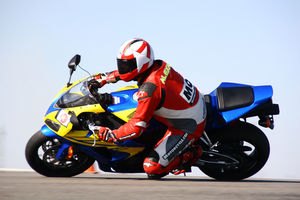
A well-heeled heel heeled well over. Thus was born the new-for-2006 CBR1000RR. Over 60 percent of the bike's components were revised or redesigned, resulting in a bike that is a claimed 17 pounds lighter wet (although the Honda website notes just an eight pound difference between the two bikes in dry weight) and makes eight more hp than the 2005 bike on the MO Dynojet Dyno.

The frame is basically the same aluminum twin-spar job as the 2005's, but with a 20mm shorter swingarm and differences in steering geometry aimed at giving the bike a more exciting ride. The wheelbase is now down to 55.2 inches from 55.6, rake is 23.45 degrees instead of the 23.75 degrees of the 2005, and trail was reduced by 1/10th of an inch, to 3.9 inches. A 190/50-17 rear tire is held up by an HMAS cartridge-style, fully-adjustable rear shock, and the front hoop is          pointed down the road by a 43 mm upside-down cartridge fork. Like a watchful bureaucrat, an HSED speed-reactive steering damper crouches atop the triple clamp to save us from ourselves.

The CBR's motor is a four valve per cylinder liquid-cooled 998 cc mill with a 76 mm bore and 56.5 mm stroke. Lighter dual overhead camshafts, a higher, 12.2:1 compression ratio and a 12,200 rpm redline account for the power increase. It's fed by dual-stage fuel injection and sends power to the road via a six-speed cartridge-type gearbox that can be removed from the motor without the motor being pulled from the frame, just like a true race bike.

It's finished with radial-mount four-piston calipers gripping 320 mm brake discs in front; 10 mm larger than last year's. The bodywork is also thinner and lighter than last year's, and the new blue-and-yellow paint scheme gives the bike an aggressive, sporty edge.

The 2006 CBR1000RR is lighter, faster and promises quicker handling. Will these changes make the Honda the best liter sporting weapon? Or will they just detract from the user-friendliness and refined feel that Honda fans love?

Since Obedience School, He Doesn't Pee on the Carpet Anymore: 2006 Kawasaki ZX-10R

If real estate is all about location, location, location, then a Superbike comparison is all about motor, motor, motor. Kawasaki is a company well-equipped in this field; from the fearsome H1 three-cylinder two-stroke and 903cc Z-1 four-stroke, to the 1985 Ninja 900 that made the word "Ninja" synonymous with a hyper-powered, widow-making sportbike, Team Green has always put big horsepower as a goal.
One Hundred Sixty-Six horsepower. I will crush you like bug. Mission accomplished. The 2004-2005 ZX-10R knocked the moto-press' collective socks off, with a bike that weighed as much as a 600cc class machine but made close to 160 hp at the back tire.

Unfortunately, it also earned a reputation for being a bit too rambunctious. A 54.7 inch wheelbase, steep geometry and lack of a steering damper, combined with all that power meant a bike that didn't quite feel as stable and planted at speed as some other sportbikes do. We always liked the ZX-10R in the two shootouts it participated in; just not enough to name it the best.

So Kawasaki hit the drawing board, and not too long ago revealed a heavily revised ZX-10R for 2006. The most noticeable change was a big, shiny Ohlins steering damper mounted crosswise behind the top triple clamp, but the changes are much deeper than that.

The chassis receives the most changes, starting with the steering head being moved forward in the frame and strengthened. Next, the engineers moved the motor mounts forward and up, as well as rotating the engine back a few degrees. The swingarm pivot was also raised. These changes result in a higher center of gravity for better "roll response", according to the Kawasaki website. This required an oddball rear tire size, a 190/55-17, with a roughly nine mm higher profile to help keep the swingarm and chassis at acceptable angles. After all this revision, the wheelbase remains unchanged at 54.7 inches.

The motor got a few changes to improve power, feel and throttle response. The flywheel weight was increased to make things smoother, the 43 mm Mikuni throttle bodies were revised to improve fuel atomization, but the rest of the liquid-cooled, dual overhead cam, four valve per cylinder 998 cc mill is basically the same fire-breather that has kept insurance actuaries awake for the If real estate is all about location, location, location, then a Superbike comparison is all about motor, motor, motor. past two years. It's a short-stroke design, with a 76 mm bore and 55 mm stroke that makes its peak torque at 9,600 rpm.

The new styling is edgy and aggressive, with big headlamps flanking a big ram-air duct

Braking is handled up front by a pair of comparatively small 300 mm floating "petal" rotors and four-piston, radial-mount calipers that use separate pads for each piston: Kawasaki claims better wear characteristics and less overheating and warping that way. The front forks are 43 mm cartridge units; fully adjustable, of course.

Some changes are for style and convenience. Gone is the wacky LCD tachometer, replaced with a very cool-looking analog tach sitting underneath a wafer-thin LCD screen with the speedometer on it. There's also a lap timer with handy bar-mounted controls. The exhaust has been moved under the seat, with two separate cans like the Yamaha R1. We inquired why Kawasaki didn't put them under the bike like the Ninja 650; apparently there's not enough room under a modern 1000cc sportbike to fit the big exhaust volume and catalytic converters to damp the sound and emissions to EPA or Euro III-friendly levels. What happened to freedom of speech?

The new styling is edgy and aggressive, with big headlamps flanking a big ram-air duct. The bike's important dimensions -- weight, wheelbase, seat height -- remain basically the same as before, but the significant changes should make this bike both easy to ride for novices and a wicked enough powerhouse to thrill the most jaded moto-journo on our staff. You get all this for an unchanged MSRP of a mere $11,199. But it's not the only bike that's been in training over the winter.


PAGE 2With a Shoeshine and a Haircut, You'll Feel Like a New Man: 2006 Yamaha YZF-R1

How the mighty have fallen. In 2004, the YZF-R1 was eagerly awaited, ready to receive the torch from its R1 ancestors, which had already won four MO shootouts in eight years. It was indeed highly regarded when new, setting new standards in power, weight, handling and build quality for Yamaha, but the excellence of the other two new models introduced for 2004 -- the friendly yet furious CBR1000RR and the mind-bending ZX-10R -- made it seem a bit behind the times. The big dog got some tweaks this year.

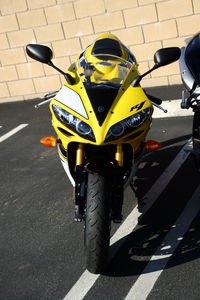
Yamaha must be planning something new for 2007, because three years without a revision is an eon in the mayfly-like world of 1000 cc sportbikes. For 2006 there were few changes; Brad Banister, Yamaha's Media Relations Manager said "there's some tweaks" that make two more horsepower and add to the rigidity of the frame and chassis. In addition, we get a slick new "50th Anniversary Edition" in a very nice yellow and black racing livery. The price also receives an improvement (for Yamaha), up to $11,299 for the basic color, $11,399 for the sinister-looking Raven edition, and $11,599 for the aforementioned Anniversary.

We've covered the R1 in detail in previous articles, but we can go over it one more time. The frame is Yamaha's tried-and-true Deltabox design of extruded and cast aluminum, designed to be as rigid and compact as possible, that takes advantage of controlled-fill casting to save weight and manufacture expense. For 2006, Yamaha's GP program engineers loaned a hand, tuning the motor mounts, steering head and lower triple clamp for a bit more rigidity and stretching the swingarm out another 20 mm for added traction. Wheelbase measures in at 55.7  inches: 0.8 inch longer than last year's model.

One thing the R1 doesn't have is room under the seat. A slice of bread will fit, but it'll get squished. That frame rolls on 190/50-17 radials in back and a 120/70-17 in front located by Kayaba upside-down 43 mm forks, gold-anodized for a little extra bling or to assist those who want to pretend they own a big-bucks LE with Ohlins suspension. 320 mm floating brake rotors are gripped by those familiar four-piston monobloc calipers, radial-mounted for optimum rigidity and feel. The master cylinder is by Brembo and is a radial-pumper like the other machines in the test.

The motor's tweaks include shorter valve guides in that familiar five-valve per cylinder head. That change, plus better flowing heads and an extra tenth of compression ratio (up to 12.4:1 from 12.3:1) should result in a couple of extra horsepower and easier-to-access power from the over-square 998 cc motor with a 77 mm bore and 53.6 mm stroke. It's fed fuel by dual-stage fuel injection and sends exhaust out through an EXUP valve for better midrange response and a catalytic converter to keep emissions down.

It's all wrapped up in a sexy and curvaceous fairing that looks good enough for the Guggenheim and weighs in at a claimed dry weight of just 381 pounds. Going by raw specs alone, it seems the Yamaha has what it takes to keep up with the youngsters; will it finally get the respect it deserves from us ingrates here at MO?


MO Dyno Results
ALL POWER ALL TORQUE


Who Ordered Snow? The Test

For our test this year, Publisher Alexander needed to line up several elements; the bikes, track time, grippy race-compound tires, and an extra rider to help us move everything around. A series of phone calls, followed by much begging, cajoling and calling in of favors owed resulted in everything lining up just in time.

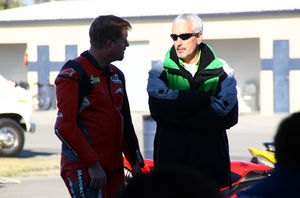
Four bikes, four riders, for God's sake can we get this thing started already?Honda, Kawasaki, Suzuki and Yamaha all made with the bikes in a timely fashion, Michelin generously pledged five sets of their most excellent and forgiving Pilot Power Race tires, Mark at The Track Club track days arranged a great deal on one of his professionally-run events, and a few CB transmissions conjured Dirty's fast-talkin', chain-smokin',            truck-drivin' and shuck-and-jivin' older brother Dale "Long-Haul" Alexander from the depths of the Florida everglades, ready to lend his mechanical and philosophical expertise to our effort.

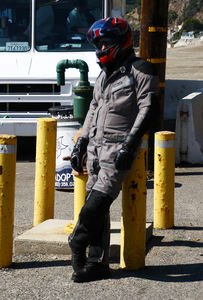
Bikes fueled, prepped and mounted with fresh racetrack rubber, we embarked on our street ride. Our route took us about 200 miles through stop-and-go LA freeway and surface street traffic, winding coastal roads, and then up and over snow-capped Pine Mountain in the Los Padres National Forest via snakey Highway 33. Climbing up over 4,000 feet, we had to keep the speeds down because of snow and ice pelting us at the summit.

After the town of Taft, we proceeded along long, straight open roads for some high-speed stability testing, and then arrived in Buttonwillow hungry and tired. After loading up on barbequed ribs, tri-tip and many pitchers of Dale Alexander-supplied beer, we got some rest at an ultra-skanky (even by MO standards) motel before heading over to Buttonwillow Raceway Park the next morning.

Did he say we had to run the track backwards? These bikes don't even have a reverse! Buttonwillow is a flexible and balanced motorsports facility just 150 miles from downtown LA. Its three-mile, 15-turn circuit can be run in a myriad of configurations and is used by many racing organizations, both car and motorcycle. We were all familiar with Buttonwillow's standard, clockwise layout, but Mark enjoys mixing things up; we were to run the course backwards. He claimed it was more fun and would result in shorter laptimes; (True for cars, but on a bike, Buttonwillow's usual increasing-radius turns magically become decreasing-radius when run in reverse, which makes the bike laptimes a bit longer than running the normal direction. -Sean) we just thought          it would add an extra dimension of learning a new track while wringing everything we could out of a quartet of the fastest sportbikes on planet Earth. Poor us.

The trackday went without incident, with help setting up the bikes provided by the very gracious crews from American Honda and Kawasaki USA. For the Yamaha and the Suzuki, we tapped the suspension expertise of Dave Moss, proprietor of Catalyst Reaction Suspension Tuning, who provides expert trackside assistance to riders and racers as well as performing full service on suspension components. His knowledge of motorcycle suspension is both encyclopedic and accurate; we're confident we were getting the most out of the suspensions on all the bikes.

After a long, cold ride home from the trackday, we continued with more street riding and evaluations of the bikes for the rest of the week. We decided to forego dragstrip testing this time, because our race compound Michelins were roached from the trackday and the temperatures were forcast in the high 20s for the Wednesday night LACR drags (never a good combination). Besides, we figured you'd want this article as fast as possible.

So here it is. After 200 track miles, 500 street miles, and much wailing and gnashing of teeth over details and specifications, we present our 2006 Open-Class Sportbike Shootout. Enjoy!


Honda CBR: Not Bad, but Not the Best

You know the Honda isn't the winner, but you probably want to know about it anyway. Here's the bottom line; it's a great motorcycle. It's fast, flickable, great-handling, and has a wicked edge to it that most consumer products in our baby-proofed world lack. What makes it so good, and with all this going for it, why isn't it the best?

It makes a wicked howl through the intakes at high rpm and has a top-end rush that will jolt your head back and loft the front wheel in every gear if you're not careful.Hopping on the Honda, the first thing you notice is the high seat and low bars. Sean noted the "reach to the clip-ons was nice on the racetrack, but awkward on the freeway". The footpegs feel further forward and higher than the other bikes, reinforcing the CBR's racetrack intentions. After that, you can take note of the nice feeling you get from the build quality and level of finish of the bike. Everything fits together beautifully, in typical Honda fashion. The instrument panel is one of the best in this test; well thought-out and easy to read.

After you fire the bike up, you notice an exceptionally smooth motor. From idle to over 12,000 rpm, the vibration level is noticeably less than the other bikes, although the Kawasaki rivals it for smoothness. The gearbox is also very nice, with a short throw and an almost liquid feel to the shifting action, no doubt aided by the smooth and light-feeling hydraulic clutch. If you're expecting refinement from the Honda, you won't be disappointed.

What will surprise you is how the bike squirts forward under hard acceleration, with the front wheel clawing at the air. Dale said he "couldn't keep the front wheel down" and Sean was all to happy to tease his big brother by doing a basketball dribble imitation with the front tire at 80 mph on the freeway. The altered chassis, lighter weight and extra power have turned the mildest of the 1000s into a tounge-pierced hooligan's tool. However, the low bars, higher pegs and what managing editor Pete Brissette called a "plank of a seat" keep the bike from being too much fun around town.

Here's a senior Honda employee secretly putting his arrythmia medication into the gas tank.. Out on the open road, the Honda has a refined and smooth feel from the motor, and the wide, relatively tall windscreen offers good wind protection at higher (read: illegal) speeds, but long-distance comfort leaves something to be desired. Your wrists, butt, and lower back will probably be aching long before the low-fuel light comes on, which won't take long, since our test unit turned in 32.9 mpg on our street ride, which included a climb over 4,000 feet as well as plenty of WFO shenanigans. Mild freeway droning at 75 or 80 mph          will doubtlessly result in much better fuel economy, as the gearing is pretty tall: 80 mph translates as about 5,000 rpm on the tachometer.

On winding canyon roads, the CBR's quick, responsive feel and ample power means it will appeal to riders who want an edgier, more focused ride. Like all the bikes here, the suspension, chassis and motor capabilities are world-class and have limits far in excess of any sane person's comfort zone for street riding. The brakes are a perfect example of this excess; they feel a bit dull and unresponsive at first, and then come on, almost without warning, with incredible power. A single finger is sufficient for street speeds; two fingers will lift the back tire and screech the front. Like the motor, the brakes' power is sharp, strong, and a little harder to control than the other bikes.

The motor is really a departure from many Honda motors. It is silky-smooth and perfectly fuel-injected, but it makes a wicked howl through the intakes at high rpm and has a top-end rush that will jolt your head back and loft the front wheel in every gear if you're not careful. A motor like this is endlessly entertaining, and we at MO predict these bikes will be the darling of the Stunt Brigade as soon as enough of them hit the salvage yards. They will doubtlessly find the cassette-style transmission a handy feature. MO predicts chrome-plated second gear medallions will be the fashion statement of 2007.

On the track, the Honda felt the most unique. The altered chassis, extra oomph and lighter weight made the bike a different animal from last year. Gabe noticed it instantly, with the wider, forward-swept (but slightly adjustable) bars putting him in a very aggressive riding position that made the bike turn with lighting response. Sean noticed the Honda went from being the "heaviest steering to lightest steering. On the CBR you can just fling the thing in there...it's not unstable, just much easier to steer."

The CBR reminds us of the original Fireblade. Can you get snow tires for it? The bike has a real road-racer feel to it that harkens back to the original 900RR/Fireblade days of 1993. It rewards highly-skilled riders, as the laptime differences between the CBR and other bikes when Sean was riding are smaller than when the other riders rode the Honda. Sean says: "The CBR is so responsive that riding it for the first time is like the first time you rode a fuel-injected bike after switching from carburetors;" says Sean "all of your          inputs are amplified and reacted-to immediately, forcing you to be smoother and surer of those inputs that you're giving. In the CBR's case, it's not just the throttle, but the whole bike."

Gabe also noticed the way the CBR seems to anticipate your every move. The very first time he went to turn the bike at Buttonwillow, at a low warm-up speed going into the "esses" after entering the track, the bike surprised him by turning noticeably quicker and harder than the bike he'd been riding the session before. After warming the tires, he was able to get on the gas harder, and the front wheel wanted to snap up into the air, matching the way the bike flopped onto its side in its immediacy.

After experiencing fantastic acceleration, thanks to a new, top-weighted powerband a noticeable drop in weight, it's time to get on the brakes. Although they have almost identical specifications to the other bikes in the test -- four-piston, radial-mounted calipers, huge floating rotors and radial-actuated master cylinder -- the rider still needed to pull the lever closer to the bar and squeeze just a bit harder to get the same power from the brakes, which come on all at once to match the bike's powerband. Because of this chassis and brake sensitivity, trail-braking into corners, especially tight, decreasing-radius ones is a tricky affair that requires skill and concentration to pull off smoothly.

But a less-confident rider might be overwhelmed with the bike's responsiveness and less-forgiving nature.We all agreed the CBR was a good choice for an expert rider on the racetrack, rewarding skill with laptimes matching the other bikes.  Roadrace champ Doug Toland was very proud of the way he influenced the redeveloped bike's character, so it's no accident a racetrack hotshot like Dirty would appreciate it; "...thanks to the quick and direct responsiveness of its chassis, it was by far the easiest bike to thread through the esses because of its willingness to change direction at high speeds." All that wheelie-ing and quick turning was fun, sure, but for overall balance, feel and ease-of-use, we all felt the Honda didn't quite have what it took to be the best.

PAGE 3Yamaha YZF-R1: Even the Godfather Gets No Respect

What's incredible about the R1 is how well it stands up to the ravages of time. Despite the ancient design being an incredible three years old (with mild revision for 2006), the R1 still bested the Honda thanks to revisions focusing on keeping and enhancing what makes an R1 such a pleasure to ride.

First off, we all liked the pretty new yellow and black 50th-annivesary paint scheme. The yellow has more than a hinIf looks were laptimes Pete would be breaking the two minute mark at Buttonwillow. t of gold in it, and it looks like a million bucks when the light hits it. For Dale and Sean -- who spent happy childhoods surrounded by AMA Camel Pro racing in its 1970s glory days -- the R1 looks how a Yamaha racebike should look.

Once on board, you touch and feel a bike that has solid build quality through and through, from the way the sexy faring fits together to the nice little bracket that keeps the clutch cable away from obscuring the instrument panel. The panel is nicely designed and finished, although some of us found the small speedometer display to be a bit hard to read. Still, everything about this bike's finish and design looks and feels right.

It sounds right, too. The motor fires up and makes all the appropriate growling and howling noises a big motor like this should make. Unfortunately, it's the least-powerful motor in the test, showing a mere 154.5 hp on the MO Dynojet dyno. But at least it is smooth and makes power where it should, with almost perfect fueling at all speeds. The cable-operated clutch is smooth with a light pull, and the gearbox is adequate, but Gabe noticed it to be a bit more "clicky", with a slightly longer throw than the other bikes. Don't ask him what "clicky" means; just accept that the Yamaha gearbox is perfectly functional and adequate, just a smidgen less smooth than the newer machines.

Riding on the street is comfortable and fun. The stable chassis is fairly roomy; 5' 8" Pete said "the Yamaha had the best legroom, but a longer stretch to the handlebars", so it's no surprise the bigger boys found it comfortable as well; Sean noticed that "On the freeway, the R1 is noticeably more comfortable than the CBR." The easy-to-use motor is perfectly willing to hoist the front wheel up on command, or whip you onto freeway onramps like you're riding an Exocet missile: redline in first gear is somewhere in the low triple digits. You can go to jail without ever using the shift lever. Why scuff your Air Jordans if you don't have to?

These are Californians riding in the snow.Freeway droning is not that bad either. The ample legroom and tolerable seat keep you from cramping up too badly between fuel stops, which will be pretty frequent if you're flogging the bike; our test unit only got 130 miles out of 4.13 gallons of premium for an average of 31.47 mpg. This is proof you have to work a little harder if your motor doesn't have the power of your riding companions'. We imagine fuel economy would be closer to 40 mpg if the pace was more relaxed and you weren't climbing huge, snow-covered mountains.

Night riding will be fun too, but your riding buddy will want to be behind you. The four projector-beams are very powerful, lighting the way very nicely. Sean noted after a 50-mile evening ride that "the R1's lights blind you: they're like mil-spec laser-weapons...they're brutal! The R1 simply paints the road with bright blue light."

On twisty roads, the Yamaha does everything a rider expects of it, just with a bit more effort than the other bikes. It feels a little bit wider, a little bit slower, and a little bit more buzzy than the competition. This isn't to say it's a bad bike; it's just that it's lacking by a fraction in several areas, which adds up to a tiny lead for the next-better machine. Still, there's no doubt an experienced rider could hustle this thing up a canyon as fast as she could any other bike. It's stable, yet turns precisely and easily, wheelies on command (but stays planted when you need it to) and offers wonderful feel and power from those terrific monoblock brake calipers and radial-pumping master cylinder. It's a good package and nobody could pick any major nits with it.

Out on the track, those tiny differences add up to make the Yamaha noticeably slower than the other bikes. A 12 hp gap in power and a slightly cruder feel kept the R1's lap times from rivaling the other bikes. Certainly an experienced The Yamaha does everything a rider expects of it, just a little slower and with a bit more effort... rider, with a little development work and plenty of practice time, could set a track record with the R1 -- or any of these bikes -- but it just didn't impart the confidence to go fast like some other bikes did.

It's still a great choice for a track bike, though. The suspension feels plush and expensive, yet not mushy, the brakes do the job without fading, and if you think 154 hp isn't enough to go fast, you're probably either winning national-level roadraces or not really skilled enough to ride one of these bikes safely anyway. It's all about the rider, not the bike, and the R1 provides a good, solid platform on which to hone your skills and get truly fast.

However, in this company, "solid", "good" and "competent" just aren't enough to take the Best Bike crown home, especially if you cost $600 (as tested) more than the least-expensive bike. If you love the looks and feel of the Yamaha it's definitely worth the money, but if we were Yamaha fans we'd wait to see what the company is planning for 2007. These bikes have a three-year cycle, and Yamaha doesn't like to be beat by anybody in the Superbike game. Just like last year, the YZF-R1 is a terrific bike, but not anybody's first pick.


Tony Bennett Opens for Frank Sinatra: Kawasaki ZX-10R

If you took the forgiving, stable chassis from last year's CBR and plopped in the rambunctious motor from the 2003-2005 ZX-10R, you might have a bike that feels like the new ZX-10R. The filling in the Twinkie is the standard Ohlins steering damper to tame its wild ways. Does it retain enough of the naughtiness from last year to sneak past the GSX-R ?

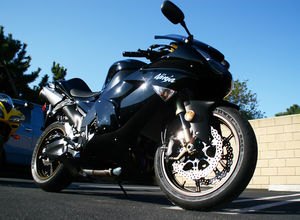
The ZX-10R looks better in black than Halle Berry in Catwoman. Apparently not, but it's still a terrific bike that will reward Kawasaki fans by providing everything they like in a Kawasaki while still being easy and fun to ride. From the hot new styling to the dyno-shredding rear tire, this bike really is working hard to please the crowd.

The styling for 2006 is not-too-shabby. Kawasaki's stylists somehow managed to make the bike even more menacing this year, although we all agreed it looks much better in black than the other colors, much to the chagrin of Big Brother Dale, who has "a thing" for red Kawasakis, according to Sean. The underseat exhausts and shapely new swingarm add a touch of class to a bike that already looked pretty good.

Seated on the new bike, the first thing that leaps into focus is the new instrument cluster. Kawasaki must have been tired of explaining why they used that wacky digital tach, because now the tachometer is analog, with the needle behind a wafer-thin screen for the speedometer readout. It looks very trick, but unfortunately Gabe found it hard to read the small stub of a tachometer needle because of poor contrast with the background color and the obscuring effect of the speedometer. Pete said the exact opposite and said it was the best in the test. Maybe Gabe needs glasses.

If you want to forget all about that, just fire up the motor. The engine on this bike sounds great, with the traditional Kawasaki intake sounds filling your helmet at high rpms. The clutch and gearbox are smooth and have a light feel, plus the fuel injection functions perfectly, so tooling around town isn't a problem.

Not as hot as Cat Woman, but close... The slightly lower level of comfort might be, though. The footpegs are low enough to offer plenty of legroom, the seat is pretty broad and comfortable, but the handlebars are noticeably lower than on the Yamaha and Suzuki. If you aren't hustling the bike through the turns, it can get uncomfortable during long freeway rides. Wind protection is also not as good as the Honda's or the Yamaha's, but we know this isn't a touring bike, right?

Where the bike works well is in the twisties. Just leave it in second gear and squirting off the corners is absolutely not a problem, not with 166 hp it isn't. The motor is smooth almost everywhere, too; the second-smoothest motor behind the Honda's. Even then, it's pretty close. It encourages you to use the whole powerband, which can make the front wheel hard to keep on the ground.

When you do get the front wheel up, the steering damper and revised chassis keep things under control for when you land. Gone is the stubby, racer-with-headlights feel of the older Zed Ex. What replaces it feels slightly sanitized, with more of a refined Honda-like feel than that old burly Kawasaki charm. The bike does everything -- turn, brake, accelerate off turns -- as well as anything we've ridden.

On the racetrack, the Ten succeeds in being user-friendly and easy to ride. It steers with a light touch, but doesn't feel like it's flopping into the turns like the Honda does. It also holds its line well, even while trail braking. The motor makes way too much power for most riders and most tracks, but as long as the operator respects that it is very controllable; keeping the hard-to-see tachometer needle below 9,000 rpm aids in power management exiting turns, and once the bike is mostly straight up-and-down, screwing it on towards redline gobbles up a straightaway like Dirty eating shrimp at an industry event.

This tail section is almost as sexy as Halle Berry's.At the end of that straight, the ZX-10R's excellent brakes keep everything under control. Sean said that it "has the best brakes...they're noticeably more powerful. They're perfect; super-powerful without being touchy." The combination of radial mounted calipers, the radial-pump master cylinder and separate pads for each piston add up to give the Kawi the edge in the braking department.

Also contributing to the speed-with-safety theme on this revamped bike is that fancy-looking Ohlins damper mounted cross-ways behind the triple clamp. It's notable for being the only adjustable damper in the test, with that distinctive Ohlins feel coming through your fingers when you click the easy-to-access adjuster knob. On the track, you can actually feel the damper working smoothly and fluidly against the bumps and wheelie-divots that litter Buttonwillow's surface. Having a damper makes a big difference, and with the speeds and acceleration these machines are capable of, having a top-quality damper is muy importante. Kudos to Kawasaki for not skimping in this area.

Four men, four bikes, eight chapped lips.The ZX-10R is designed to use a 190/55-17 rear tire, not the 190/50-17 size we used. Michelin doesn't make their Pilot Power Race in the correct size; in fact, almost nobody does. Kawasaki used the taller sidewall (the "55" refers to the sidewall being 55% of the tire width) to increase stability and traction. However, Kawasaki had two technicians at the track who did some suspension setup and adjustment to make sure the shorter profile didn't adversely affect handling or safety. They rode the bike (quickly, too!) and seemed to think the Michelins suited the bike just fine, and Sean agreed with them, having also ridden the bike on correct-sized tires at the bike's launch at Fontana; "I liked the way the ZX-10R felt with the different tires." If there's a reason the ZX-10R didn't win, it's not because of us changing the tires.

"I was convinced it was going to sweep the shootout this year", said Sean after the test concluded. He was pretty surprised that it didn't. It's a very good bike, one that will surely please anybody who buys one with its winning combination of stable, predictable and forgiving handling with a colossus of a motor. However, at the end of the day the Kawasaki just fell short in the charisma department on the track and on twisty roads. It also lacked the comfort that a good street bike needs. Were it not for the brilliance of the GSX-R's design the ZX-10R would have won handily; as it is it's a unanimous choice as second-best.

PAGE 4King of the Hill: Suzuki GSX-R 1000

If the GSX-R 1000 was a person, he would be the guy at a wedding who makes a perfect toast after dinner, dances a flawless Cha-Cha with the bride's mother and then goes home with two bride's maids after getting a phone number from the hottest waitress. It's got a perfect combination of steady handling, rider comfort and rocket-ship motor that makes it a hands-down winner of this test.

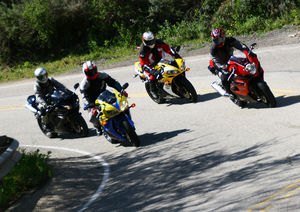
The Suzuki's styling looked as fresh and clean to us this year as it did when it was first introduced. The nice touches, like integrated turn signals in the   The best thing about this kind of picture is that Gabe can lie and say he's passing these guys...        mirrors and bodywork and slim seat and tank, are reminiscent of the well thought-out design on the SRAD GSX-R750 of 1996. The styling is aggressive and futuristic and should hold up well though the ages; those 10 year-old GSX-R750s still look pretty fresh, in our opinion. Managing Editor Brissette disagreed, though; he called the looks dated, perhaps because of the twin air-scoops or more curvaceous styling. That weird Electrolux-style exhaust canister grows on you, but it's an easy matter to get one from the aftermarket if it offends you too much.

What won't offend you is the humane ergonomics you notice when you get on the bike. The narrow seat allows shorter riders to easily put both feet flat on the ground at stops, the footpegs are placed at a great position relative to the seat, and the bars are positioned to be both low and close to the rider, so he doesn't have to lean too far forward to reach them. "By far, the GSX-R is the most comfortable", says Sean, and Pete also thinks that the "GSX-R is still the most comfortable overall for me...it fits me like a glove." Gabezilla enjoyed how the GSX-R felt right and familiar, from the not-too-firm and not-too-soft seat to the easy reach to the bars to the pegs being right where he likes them.

Instruments and amenities are well thought out, too. The instrument panel is nicely laid-out and easy to read, with the clock and coolant temperature visible with the trip odometer. The passenger seat swaps with an included solo seat cover. Like all the passenger seats on the liter sportbikes, this one is mostly an afterthought, with limited comfort for the rider. The mirrors are far enough away from the body to give a decent view to the rear and have turnsignals integrated into them to aid track preparations.

Because of the high comfort factor, the GSX-R is great for street and highway riding. An extreme forward lean quickly becomes tiring tooling around at 30 mph, but the Gixxer's compact-yet-comfortable seating position makes around-town trips tolerable. On the freeway, decent wind protection (even with the fashionably low windscreen) and an OK seat let you ride for a full tank without squirming too much from discomfort. It was Gabe's choice for the 150-mile ride home from the track; being able to cruise at a buck o' five cuts down on the saddle time, and he covered that 150 miles in well under two hours, counting a stop to use the facilities.

In any case, this bike is no tourer: how does it do on twisty roads? It's the bike that feels the most like a 600, light and compact with a free-revving motor. That light, manageable feel gives you confidence to ride a little harder, even when there's snow on the ground. Cresting Pine Mountain, Gabe had It felt like he was practically sideways and that the bike was going down; he reacted by watching the movie of his life flashing before his eyes.never seen snow on a motorcycle ride before, but he never felt the back tire slip or slide. On non-frozen pavement, the GSX-R's fluid gearbox and clutch and massive power output let you command the road and provide plenty of entertainment.

The racetrack is a demanding environment, revealing even the tiniest flaws under extreme conditions. The GSX-R1000 is a great track bike, due to its forgiving nature and flexible motor. We all preferred it on the track, even though the ZX-10R is slightly faster. The GSX-R was just that much easier to ride, with a flexible motor and compact feel.

The bike's chassis and brakes stood out by not standing out at all. That stout, black-painted frame can hold up to whatever the torquey motor or bumpy track surface can dish out, and once Catalyst Reaction set the GSX-R's suspension up for us, it worked just about perfectly, reacting to bumps with a plush and controlled feel. The steering damper does its job as well, as Gabe learned on his second session riding the GSX-R.

Thanks for making such a crash-resistant bike, Suzuki. Gabe thanks you. Kaiser thanks you.He had just passed a slower rider when he got on the gas a bit too hard and a bit too early coming over the notorious "lost hill" with cold tires. The bike reacted by spinning the back tire, slewing the bike sideways. It felt to him like he was practically sideways and that the bike was going down; he reacted by watching the movie of my life flashing before his eyes. "There I was, huntin' coons with Pa, ridin' in an old Ford with Betty Lou to go to the sock hop, working on the George Wallace for Governor campaign, when I realized that I was actually seeing            someone else's life flashing before my eyes." Luckily, the GSX-R's stable chassis and adequate steering damper saved Suzuki a few thousand dollars in parts and The Hairy One a lot more money in hospital bills by gently recovering from what he was certain was a horrific crash. Thanks, Suzuki!

If the chassis is good, the motor is better. It has a visceral, raw feeling to it without being unrefined or hard to use. Dale liked the cheerful character of the motor's fueling; "the mid-range is huge...I was able to feed just as much power as I wanted to." His not-so-little brother agreed; "The power is available everywhere, but it's not intimidating." The throttle is far more precise...what you dial in is exactly what you get", Dirty said. The motor is noticeably smooth under hard acceleration, but just a little buzzy at steady throttle. Once you get way up in the powerband, you're treated with gobs of power that will have you giggling and screaming inside your helmet; "It's going to be first bike to initiate tiered licensing in the USA", said Pete. He's kidding, but just to be on the safe side, if you know any Congressmen, don't let them ride your GSX-R. 


 Conclusion: Two Good Choices

We did a lot of riding, and you've done a lot of reading, to come to this conclusion: the GSX-R is still the best bike, even after the other OEMs spent so much time, money and development effort to knock it off its perch at the top of the henhouse. It's ironic that the Suzuki is the only bike that remained basically unchanged, although it did seem to pick up a few extra horsepower.

The Honda was interesting as a demonstration of how far Honda will go to compromise or alter some of its traditional ideas about sportbike design to be the best. When Honda changed user-friendly character to build a racetrack winner, they took away a great feature that was attractive to the many novice trackday and street riders out there. Sure, it's a lot of fun for someone at Dirty's level of ability to go nuts with on the track, or do highly illegal things with on the street, but those with less ability will just be perplexed - and scared.

Buttonwillow Lap Times


The Assassin

The Hairy One

Fried Cheese

Avg. Lap Times

Suzuki GSX-R

2:25.77

2:09.00

2:03.82

2:12.86

Kawasaki ZX-10R

2:24.87

2:11.16

2:05.03

2:13.69

Honda CBR 1000RR

2:26.02

2:11.19

2:04.94

2:14.05

Yamaha YZF-R1

2:27.12

2:13.89

2:04.36

2:15.12


The Yamaha is the same wonderful bike it was two years ago, but at this level -- the 1000 cc sportbike class -- the competition is demanding. A bike has to have an outstanding, earth-shattering level of performance to hold up as a winner through the three or four years of its product life cycle. The Yamaha is a great bike -- it narrowly missed winning our seven-bike 2004 Open-Class shootout -- but it's not good enough to beat two very excellent machines. All the miniscule flaws we picked about the Yamaha, like the tall gearing, slightly sloppy gearbox, and heat emanating from under the seat, added up to make the R1 feel a little old-fashioned, and it's remarkable that it beat an almost totally redesigned Honda. We think you will be totally happy owning this bike, as long as you don't mind that there are better, more modern and faster bikes out there.

That finally brings us to the more modern and faster bikes. The first is the ZX-10R. Sean was very emphatic before we started testing that it would win; ridden alone on a fast, smooth track like Fontana it seemed like an incredible, world-beating bike. But ridden in the real world, against a supremely engineered bike like the GSX-R, it didn't feel as dominating. We were also surprised when Dale, a Kawasaki fanatic, picked the Suzuki, despite raving about how fast that ZX-10R was.

The ZX-10R isn't a bad bike. In fact, it's an amazing bike. Anything that makes 166 hp --stock -- should never be dismissed out of hand. However, how that power gets from the motor to the pavement -- and how well your brain and hand can control it -- is more important than how much power there actually is.

"For Our Money" Table
How the testers would spend their own money. We scored the bikes 5 pts. for 1st, 3 for 2nd, 2 for 3rd and 1 for 4th.


Sean "Queso Frito" Alexander

Dale "El Pelo Loco" Alexander

Pete "Asesino" Brissette

Gabe "El Melenudo" Ets-Hokin

Totals

Suzuki GSX-R

1st

1st

1st

1st

20

Kawasaki ZX-10R

2nd

2nd

2nd

2nd

12

Yamaha YZF-R1

3rd

3rd

4th

3rd

7

Honda CBR 1000RR

4th

4th

3rd

4th

5


No other bike since the first-generation R1 has won a MO shootout two years in a row with practically no changes. The GSX-R was able to win against three other very competent challengers because it succeeds in so many areas. First, it's really, really fast. If you can't use all of 161 hp, you can't use 166, either, so the Kawasaki's five-horse advantage -- which would be a huge lead in a 600cc shootout -- isn't really that glaring. Second, it's comfortable in a way that encourages the rider to go faster, by dint of that instantly familiar feeling a few of us reported. Finally, the chassis is responsive and forgiving, friendly to the less-skilled among us while still keeping those with more ability amused.

You could say all those things about the Kawasaki, too. But what the Kawasaki lacks is that angry, untamable feel that the GSX-R has. The Ten has been tamed a bit too much, but the Suzuki still has enough edge and character to really stand out in this company. We've said it before, but it still makes sense: buying a motorcycle, especially one in this category, is pretty irrational. The GSX-R is practical, reliable and a good value, but it's also a wild-eyed maniac when you want it to be. If that's what you need, then a GSX-R should be in your future.

Meet the Testers - Second Opinions

A Mild Man with Strong Opinions: Pete's Pick

With Sean's raving about the ZX10R after he attended the intro and his somewhat cautious review of the CBR1000RR I admit I had some preconceived notions about both bikes. In the first few minutes of my street stint on the Honda I figured I was going to be agreeing with Sean wholeheartedly in his view of it. Anything more than a hot breath on the throttle and the front end of this new CBR refuses to stay on the ground. Compared to the previous 1000RR, it was both exciting and unfamiliar. I thought, "Honda has finally got on with the rest of the crazy psycho engines in this cSo that's what happened to Fabio. lass and they've done it in a big way -- I can't wait to wind this thing out!" And indeed, just as Sean had said, it accelerates much faster.

Yet Honda hasn't sacrificed their legendary stability, at least as far as I'm able to perceive. The wide-set clip-ons offer great steering leverage, yet somehow the CBR still felt the slowest turning of the group. Yes, it steers quicker than last year but I often had the sensation of having to muscle it through the esses on the track. Ultimately, as I told the Honda crew that was on site, it has "good ol' Honda stability." And for someone riding at my level that is an advantage. Perhaps if I were lapping 15 to 20 seconds faster I might start to perceive the bike differently. Despite these attributes I was never able to get completely comfortable on the 1000RR on the track. It seems taller than the other three and that may have contributed to my never being able to get it pitched over as far in the corners as the others; I was often grinding the foot peg feeler before I could get my knee down. That was not the case on the other motorcycles. However, my experience shouldn't detract from what is another awesome Honda.

For such an icon of the industry with 50 years of successful history I'm surprised that Yamaha didn't celebrate with anything other than the best paint scheme I've seen on a motorcycle in years. Hands down, the R1 is the looker of the bunch. Unfortunately it takes far more than looks to hang in this class. The R1 still has a great screamer of an engine; it's easy to ride fast and has the best seat to foot peg relation of the four. And that extra leg room carries a lot more weight in the big picture than a quick lap time does. Nevertheless, it appears that time has caught up with the Yammie in the brake department. What were once class leaders now fall to the bottom of the pack for me. The feel at the lever was vague and generally a soft, somewhat underpowered sensation. They worked perfectly fine but lacked the telepathic sensitivity that the rest here have.

A very thin line separates the GSX-R from the ZX-10R for me. Both have superb, effortless brakes, invisible transmissions, ultra responsive throttles and ballistic engines. Were it not for the ZX having the plushest seat in the crowd, I wouldn't have been as happy with long miles in the saddle thanks to an aggressive foot peg/seat relation. After a 100 mile freeway stint, I could barely unfold my leg from the peg. No biggie though, because this new model is a blast to ride, street or track. A big contribution to my good laps on this bike was the fact that it stays calm and cool under hard acceleration or heavy, end-of-the-straightaway braking. I never got it to complain. Sean's gushing phone call to me after he returned from the intro on this bike was completely warranted, in my opinion. It's also worth noting that the Kawi has the best cockpit here. The seemingly superimposed speedo and vitals indicator that's encircled by the tachometer is super easy to see no matter what angle the sun hits it and it's ultra bright at night.

Yet for all the new goodness of the ZX-10R, the GSX-R takes the edge for me with what feels like a custom-fit motorcycle. Everything

Hands down, the R1 is the looker of the bunch. Unfortunately it takes far more than looks to hang in this class.

about the ergonomics seems like they were designed specifically for me; from clip-on placement and their relation to the saddle, the foot pegs feeling like they're slightly farther back (which helps take the sting out of the compactness that is becoming standard for this class) to the shape of the fuel tank. It all adds up to a bike that feels smaller and lighter than the others and helps create an environment that allows me to attack corners aggressively and with more confidence. I also felt like dealing with a front end that rarely seemed in contact with the tarmac (thanks to that wicked engine), wasn't an issue. On one occasion I choose the wrong place to start applying the brakes heavily to set up for a turn. This left me doing my best Aaron Yates impression with the rear wheel cleanly off the ground by several inches. Yet, the GSX-R never lost its composure (so long as I didn't), and it settled down quickly. I can live with the dated looks that the other testers noted if I can have a bike that makes going fast way too easy and leaves me with the biggest poo- eating grin.

Long live the Gixxer! Big Words from a Big Man: Dale Alexander Chimes In

I know MO says no ties but I say that the Kawasaki ZX-10R and the Yamaha R-1 seemed pretty darn close. Each brings a balanced high-performance rocket to the game. A toss of the coin put the Kawasaki ahead. On these two bikes I was inclined to exercise more restraint because I didn't feel as "connected" as with the Suzuki. I thought the Yamaha had the best sounding engine in the test and looked good in the famous racing The brothers Alexander. Hide the beer and chicken wings! colors of my former sworn enemy. Credit where it is due, the Yamaha is one nice bike. The Kwacker had plenty of that old green-blooded swagger, maybe the best brakes, a good deep sound and it looked pretty good, too.

The Honda CBR1000RR was a big, bad, wild-eyed stallion: hold thee on! The Honda felt like it was even more powerful than the others to me. It isn't by much if it is, though, and that's the good news--and the bad news--to me. The good news is that for that sheer "woah, I just grabbed a handful of modern 1000cc sportbike at over 100 MPH, in third, and look, there's the sky!" thing it ruled. The bad news is with my riding style and my level of skill its feel caused me to quickly vote it "Bike Most Likely for Dale to Crash On". After a moments thought, I decided that maybe the Honda should be my last choice to crash, so I took it easy on the Honda - mostly.

The Honda received by far the most compliments on its paint colors and/or design when I was on or near it, but I thought it would have looked better in red. The Honda caused me to think about how in some cases less power might be better. I ragged on Honda about not giving us what we wanted but the more I think about it that's just what they did with the CBR1000RR. These bikes all fly and a better rider than you will probably be faster on any of them regardless of what either of you are riding, which leads me to this conclusion:

Unless you've opened up a modern 1000cc sportbike, `Busa or ZX-12R for a bit lately I don't think most could believe how fast these motorcycles are. In the '04 test I was overloaded; now I'm just overwhelmed. These motorcycles are so fast their power has to be experienced to be understood: words can't do it. It takes more skill to use that power than I can imagine.

In the '04 test I was overloaded; now I'm just overwhelmed. Sooo... I started thinking... If you took two equal riders and one bought any of these bikes and the other bought a used sportbike for half the price (giving up 20+ HP) and spent the other half on gear, suspension/chassis, schools and track days who would be the better, faster, safer rider? Which bike would be faster in the canyons? Which bike would be faster on the track? -

With all that in mind, the Suzuki shined for me on the street or track with its superb chassis (I can only think to compare it with a Ducati 749, the best handling bike I've ridden), great brakes, strongest (feeling) midrange and most linear throttle response. It was easily the most confidence inspiring of the hyper-powerful bikes in this test to me. I also thought it was the nicest-looking bike in the test. Since they're all so good you should get the one that floats your boat the best. Make mine Suzuki!

Gabe Ets-Hokin: $11,000 is a Lot of Laser Hair Removal

Let's make one thing clear. If I found $11,000 lying on the ground, I'd be inclined to spend itI swear this is called Main Drain road. I was just following orders. on laser hair removal on my back (which is now legendary amongst the moto-press corps for being the hairiest ever). I love the boost to velocity and ego that powerful motorcycles give you, but I think I'd enjoy being allowed into public swimming pools even more. In any case, who has enough bread to blow on such frivolities as a smooth back or a 166 hp motorcycle?

Luckily, through the miracle of consumer financing, most of you reading this have access to the astonishing level of performance these four bikes offer. Those of you new to riding -- and I mean within the last ten years -- might not appreciate it, but 11 grand did not get you anywhere near this kind of bike back in the day. A stock Yamaha FZR1000, feared and respected by the most wild-eyed moto-journalist in the early Clinton era would now be perceived as a slow, heavy sport-tourer for girls by a lot of you. In the early `90s a custom bike builder could have provided a modern superbike's performance for 50 grand, but you'd have a tuned-to-the-gills racer with headlights that would be barely rideable.

That makes $11,000 seem like a pittance, doesn't it? So if I already had the laser done, which of the four would I want? It's a tough choice. The CBR reminds me of the original CBR900RR/Fireblade: twitchy, uncomfortable and challenging to ride fast. I love the way it looks, sounds and feels, and I know I could get the laptimes down on it if I really focused and had lots of track time, but it's too much for me. It's just not something I'd choose to ride every day.

That R1 is a swell piece, too, and I picked it last year as the bike I'd buy for street-only use. But that was last year, and if I bought one now I'd feel like a dummy when I saw the spy shots of the inevitable new-for-2007 YZR-R1 that will probably be a great bike, judging by the raving coming from those who have ridden the 2006 YZF-R6, whatever it revs to. The 2006 R1 is a nice, well-built bike that does everything a liter sportbike should do, but now fails to inspire me in this company, especially when you factor in the extra $600 it costs.

One Hundred Sixty-Six HP! At the back wheel! It's absurd. I do like that ZX-10R. When Dirty first showed me the dyno chart from it I almost wet myself. 166 hp! At the back wheel! It's absurd. What the hell is that for, anyway? Land speed records? Towing a house trailer? Tunneling to the center of the Earth? It's senseless, but fun, and it gets the same fuel economy and probably has the same maintenance costs as my 600 cc Triumph. Amazing. The motor is almost as smooth as the CBR's, and it's loaded with nice features. It's also remarkably well-finished, has very user-friendly handling and terrific brakes.

So why couldn't it topple Mr. Gixxer? The Kawi is really a great bike, but it seems to lack the edgy, bad-boy quality of the GSX-R. How the GSX-R pulls this off while still being comfortable, smooth, and easy to ride is beyond my tiny little mind's power to comprehend, but like I wrote last year, the Suzuki's blend of big power (and there's even more of it this year) aggressive yet classy styling (did Pete really call it "dated"? Is he insane? It's only a year old!) and sublime, forgiving handling make it my new object of desire. You get all that for $10,999? I've changed my mind: I'll live another few years with a hairy back. I can't see it in the mirror anyway.

copyright (c) 2008 Verticalscope Inc. Story from http://www.motorcycle.com/shoot-outs/2006-open-superbike-shootout-3677.html