'03 Ducati SuperSports - Motorcycle.com

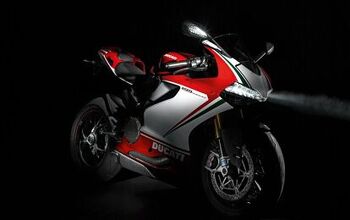
That's DS for Dual Spark, the tell-tale sign of which is a spark plug poking out from the right side of the rear cylinder head (the one in the front is less visible), of the latest air-cooled Ducati twin.
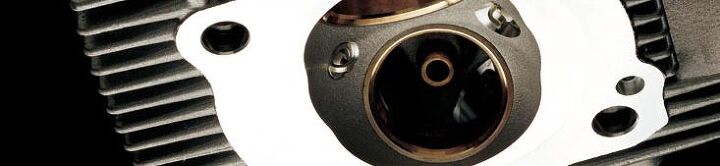
Along with the extra spark plug in each head comes, well, an entirely new head. Two-mm bigger valves--45mm intakes, 40mm exhausts--set at a steeper included angle produce 10:1 compression (9.2 in the old 900) when banged closed into new, supertough beryllium/bronze valve seats, and those bigger valves are lighter too thanks to 7mm stems. Revised desmo cams (feels like for more low end and midrange) now ride in plain bearings instead of rollers, and exhaust ports are 40 percent shorter for greater heat dissipation. Bore and stroke are now 94 x 71.5mm instead of the 92 x 68mm of the long-running 904 L-twin. A couple of new cooling fins add strength, shed more heat and give the new engine looks to go with its heritage.
New pistons, of course, with tighter-sealing nitrided-steel rings live in thicker cylinder barrels. New rods are made from 3ONiCrMo4, which flows very nicely during forging, we're told, thereby making possible a rod of optimal cross-section--thinner but wider fore-to-aft. After forging, both mechanical and chemical stress-relief processes are used, the end result of which are rod surfaces free of imperfections. These reciprocate on a new, more rigid crank with better mass centralization, and oil delivery ports redesigned around structurally critical areas. Speaking of oil, a new pump and channels produce the kind of higher flow the new cam bearings require, which also happens to aid engine cooling in the process.
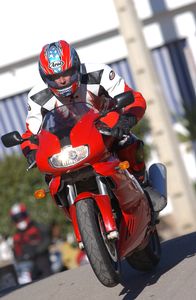
In short, there's a lot more going on here than bigger pistons and an extra couple of spark plugs (which are not of the $20-each iridium type).
To find this all out, I drove to LAX, flew to London in a middle seat, changed planes to Barcelona, stayed overnight there at the Hotel Alfa on the outskirts, flew to Almeria the next day, and rode a bus to an almost empty hotel/time-share deal there on the Mediterranean which looks almost exactly like the ones I've been to in Baja--same scheme, different continent. In the middle of nowhere in the off season, there was little for the American/Canadian motopress to do but eat, drink, sleep, discuss bacon and ride motorcycles. I don't know if Ducati was trying to guard us from Spanish terrorist cells or ourselves?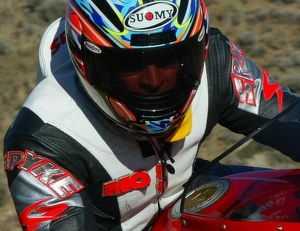
As they've been doing ever since the introduction of the 916, Ducati's air-cooled Supersport models have gotten used to playing second fiddle, and the day-two street ride upon the new DS1000, and the new 800 and 620 Sport models, felt like a sort of consolation prize following the 749 near rain-out. Looked like rain again that day, too, which luckily failed to materialize since there was no way, it turned out, I was going to get my decade-old rainsuit over the hump in my Spyke leathers. In my day we had no humps....
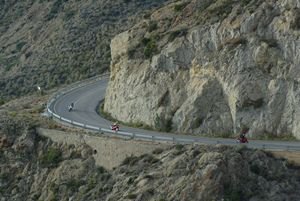
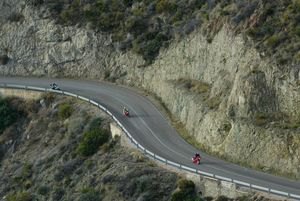
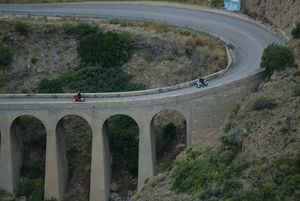
What happens at these press events lately, is that the organizers lay out a nice little route, and provide maps and even laminated roll-chart type cards which tell you exactly where to turn according to your tripmeter--and they even post their people at crucial junctions to wave you in the right direction (the point of which is to herd the group to its pre-ordained pho tography stops since the whole damn production is aimed at getting words and pics of the new bikes out there), and almost every time I wind up riding mindlessly along, taking in the local color through the little towns (where all the critical direction changes take place), and assuming the people ahead of me must know where they're going since they seem so confident--barely even glancing at the maps thoughtfully taped to their tanks by Ducati. (Yet another lesson that confidence is so often directly proportional to cluelessness.)
The mud road was one indication that we might be off-route. "Damn Ducati people I can't believe they'd send us down a dirt road on these bikes," spat Ken from Rider magazine, while our fearless leader Dave Searle of Motorcycle Consumer News fame (Ken calls him "the Searlmeister") appeared as usual unfazed or is that well-sedated? The Spaniard directing traffic through the construction site informing us our motorcycles probably wouldn't make it through the foot-and-a-half deep puddle down below was another clue that we might have made a wrong turn. No big, we turned around, me first since I'd been at the rear. Say, this is some nice gooey mud, isn't it? Yes, and once headed the opposite direction, it was roost heaven on the big DS1000, point and shoot. The mud gave way to pavement soon enough, but the tires of everything that had come before left a nice slick residue for miles; the big air-cooled bike starts producing really useful torque at around 2500 rpm, but is so well-controlled by its new 5.9 CPU brain that even in real slick stuff, you can spin the tire or not with your right hand.
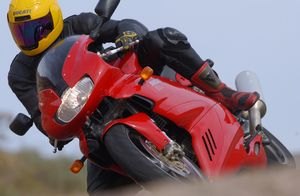
The 904cc twin in the last big SS was an excellent motor, the new 992cc unit is even excellenter: smoother-running, more tractable at lower revs, and more powerful. Ducati claims 5.5 more horses (at only 7750 rpm), and its claimed hp figures lately seem to coincide closely to the rear-wheel numbers produced by our Dynojet. Ducati says 85.5 for the DS1000, which probably is just about 83.
More by JohnnyB


Comments
Join the conversation