
Road Rage and You
But as this charioteer lurched over towards me
I struck him in my rage...
He was paid back, and more!
Swinging my club in this right hand I knocked him
Out of his car, and he rolled on the ground.
I killed him.... I killed them all.
- Sophocles, Oedipus Rex, 430 BC
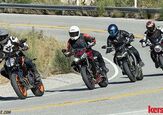
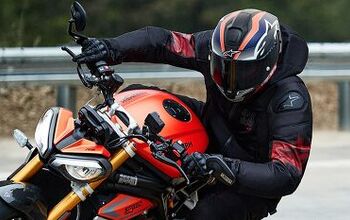
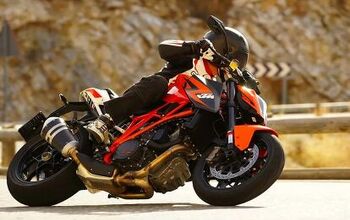
You're on your brand new Super Moto bike and you want to go for a ride. You call up your friend, and you meet for coffee. You talk about your new KTM and how fast and fun it is, how it will give you an edge over the plodding, inattentive masses in their Volvos, rental cars and SUVs.
You roar around the car on the shoulder of the road, scream a few choice obscenities at the girls and do a wheelie around the bend.
You head out to the beach, the thumper's motor roaring in your ears and the coo
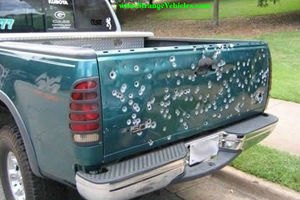
Something snaps inside the reptilian core of your brain stem. You roar around the car on the shoulder of the road, scream a few choice obscenities at the girls and do a wheelie around the bend. Panting, you start to grin a little bit as you wait for your friend at the next stoplight when a guy in a pick-up truck suddenly pulls up next to you...
"Hey, that was my daughter in that car you were yelling at. Why don't you chill out?" he yells.
"F--k you!" you respond, startled. You take off after giving his door a well-placed kick with your steel-toed motocross boot. You gun the throttle, but he was already on the gas and his truck swerves towards you.
Whatever happens, you've been involved in a road-rage incident. And when a car and a motorcycle are involved in a crash caused by road-rage, it doesn't matter who was right or wrong, or if the car driver deliberately tried to make the motorcyclist crash, because the end result is usually the same: a killed or injured biker.
"Road Rage" is not a legal, medical or scientific term. Instead, it is a term used in the news media to describe "a range of anti-social behaviors and/or acts of aggression which occur on the road", according to a 1999 Australian study. Such behaviors can include speeding, swerving, cutting off other drivers, running stop signs and other traffic signals, to extreme acts like ramming other vehicles, getting out of the vehicle to physically fight, or using firearms to settle "disputes". According to a 1998 study by the National Highway and Traffic Safety Administration (NHTSA), six out of 10 drivers felt personally threatened by another road user in their past year of driving.If you think road rage is any threatening display of aggression, then road rage is a rampant epidemic that touches everybody who uses public roads. According to a 1998 study by the National Highway and Traffic Safety Administration (NHTSA), six out of 10 drivers felt personally threatened by another road user in their past year of driving. However, only one or two percent of drivers from a 2002 study reported either getting out of their vehicles to assault or argue with another driver or attempting to hit another driver or vehicle with their vehicle. These incidents rarely result in injury or death, but when they do, they receive much attention from the media.
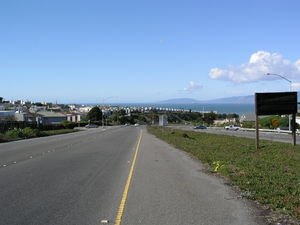
On Christmas Eve, 1999, an Oakland, CA motorcyclist named Julius Long was riding his brand-new KTM Duke II near Ocean Beach in San Francisco when he had some kind of verbal altercation with a pair of women in a car. The father of one of the women, a Pacific Bell employee named Gerald Bowen, saw the incident from the cab of his pickup truck and followed Long so he could tell Long what was what. When he caught up to Long, the 49 year-old biker started screaming at him and kicking his door, according to Bowen and other witnesses.
What followed is the subject of debate. Long pulled away and Bowen followed him. According to Bowen, Long pulled ahead of his truck and then lost control of the KTM, which dumped him under the truck, killing him. Other witnesses say Bowen intentionally hit Long's bike. Bowen blames Long's aggressive attitude and what he believes is a dangerous, highly-strung bike that is ready to spit off an unwary rider at any moment: In a phone interview Bowen told me that Long's bike was a "260cc Duke II: it's very unpredictable, fast and top-heavy, not advised even for experienced riders". Whatever happened, Bowen maintains it was completely Long's fault, even though he tearfully apologized to Long's wife in court and said he felt "immense responsibility."
Bowen was arrested and eventually pled nolo contendre (no contest, which works like a guilty plea but doesn't admit guilt for the purposes of future civil lawsuits) to misdemeanor vehicular manslaughter. The San Mateo County court gave him a reduced nine-month sentence in county jail. After six years, Bowen is still sad Long died; "I still think about Mr. Long every time I drive by [that spot]", but does not feel his actions were to blame.
Bowen told me he said that because he was in a situation where the motorcyclist died, even if it was all Long's fault, as 58 year-old Bowen was an avid motorcycle racer and enthusiast and had only sold his last Harley about five years before he killed Long. In Bowen's view, the relationship between cars and motorcycles in a crowded urban setting like the Bay Area is an adversarial one that will lead to death or injury of motorcyclists; "I had a Harley, [but] you couldn't settle back and relax ...I didn't like to defend myself riding down the road." Now Bowen sees "motorcyclists cutting through traffic, smashing mirrors..."
Fournier gunned the motor of his SUV, passed Stern, and then attempted to teach him "a little bit of a lesson" by hitting his brakes.
Bowen maintains he was framed by over-zealous San Mateo prosecutors, but my call to Deputy San Mateo District Attorney Kathleen Rodgers revealed anything but a zealot. "I don't like motorcycles: I think they're dangerous", Rodgers said when I told her who I worked for. Rodgers had been assigned the case from another DA and was not a homicide prosecutor. The DA's office in San Mateo county, like most DAs, just wanted a fast conviction.
The Long killing is eerily reminiscent of another killing that occurred just 50 miles away in 2004. Rick Stern, a 55 year-old Harley rider from Monte Rio, Calif., was riding along Bohemian Highway, a meandering, two-lane road that winds its way through the redwood forests of Sonoma County. It has some annoyingly long double-yellow line zones, especially if you're on a motorcycle and stuck behind tourists or other slow-movers. Stern passed a Ford Explorer driven by 48 year-old Mark Fournier, a man who has admitted to having "anger issues" and who has been described by his doctor as having "a hair trigger". Fournier gunned the motor of his SUV, passed Stern, and then attempted to teach him "a little bit of a lesson" by hitting his brakes.
Stern skidded 111 feet before he hit the Explorer. He died of massive chest injuries in a helicopter on his way to the hospital. Fournier admitted to authorities he passed Stern and purposely hit his brakes ten months after the crash. Fournier's trial for vehicular manslaughter, voluntary manslaughter, and assault with a deadly weapon is scheduled for May, 2006.
Another biker was killed last year in Delaware when 40 year-old Joseph August was riding with a friend near Hartly, Del. August and his buddy were cut off by a Chevy Suburban driven by 27 year-old Willis Miller. August and the friend followed Miller about 100 feet down the road, parked their bikes and confronted him. In the ensuing argument, they yelled and screamed at each other, and one of them damaged Miller's rear-view mirror. Then they got back on their bikes and took off.
Smart has noticed what may be a link between perpetrators of road-rage incidents and what psychiatrists call "explosive personality disorder" (EPD).Miller, who had been drinking heavily earlier that day, turned his truck around and took off after the two men, hitting speeds up to 80 mph. When he did catch up, he hit the bikes from behind, shoving August off the road and making the other rider crash 300 feet further up the road. August died from internal bleeding. Miller tried to hide at first but turned himself in and pled guilty to manslaughter earlier this year.
What turns ordinary motorists into killers of motorcyclists, pedestrians, and other motorists? Although there isn't as much scientific research as you'd expect, many researchers worldwide have done some work in this field. Dr. Reginald Smart, who works with the Center for Addiction and Mental Health in Toronto, Canada, has analyzed road-rage incidents from thousands of surveys, interviews and studies.
Smart has noticed what may be a link between perpetrators of road-rage incidents and what psychiatrists call "explosive personality disorder" (EPD). He theorizes that this "disorder may be more prevalent among road rage perpetrators," although he admits that no studies have correlated it with people who have injured or killed other motorists during an instance of road rage.
There are two distinct categories of road-rage incidents and road-ragers. The first is common; you've either
The second category is more serious. "Dangerous" or "frequent" road-ragers differentiate themselves from their more casual brothers by actually acting on the rage they feel. "That's what we're concerned with" said Dr. Smart in a phone interview. These are people who report having a road-rage incident more than six to 10 times a year. They have "psychiatric problems, short fuses, things bother them that wouldn't bother most people." Acting out can range from getting out of their cars to confront other road users to brandishing -- and using -- weapons like guns, bats, tire irons, knives or even their cars and trucks. This behavior is correlated with a psychiatric condition known as "explosive personality disorder", which is marked by the subject suddenly exhibiting violent, destructive behavior.
How does this affect motorcyclists? Smart acknowledges there is little research about motorcyclists and road-rage, either as victims or perpetrators. He says that motorcycles "just don't come into view, but maybe they should." However, there is an interesting link between high-performance sportscars and road rage, which is germane because almost every motorcycle on the road is, by automotive standards, a high-performance vehicle.
Men far outnumber women in all kinds of road-rage, and younger men are far more likely to engage in risky, dangerous, aggressive behavior.

More by Gabe Ets-Hokin, Senior Editor



Comments
Join the conversation