
Rain Riding Part I: What to Wear
Why Ride in the Rain, Anyway?
You have a car, don't you? It's okay, I have a car too. So why, oh why would anybody ride in the rain? Are they stupid? Do they have a screw loose?
You'd think that American Motorcyclists were water-soluble, the way they avoid rain riding. As soon as there's any hint or chance of rain, the motorcycles disappear like they've been vacuumed up by God's own Electrolux. I have a theory as to why this is.
As I've touched on in previous articles, [Manifestos I and II] we American bikers mostly regard our motorcycles as toys, recreational lifestyle accessories that we use when everything else in our lives -- kids, family, work, house, golf, etc.--are attended to and under control. This means motorcycling is a leisure time activity, a fun pastime for when the weather is perfect and there's nothing else to do. They are "transportainment", not transportation.
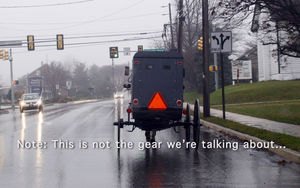
Because of this, American motorcyclists ride their motorcycles a very short distance every year: 1,200 miles on average, according to the US Department of Transportation. Few of those miles are spent in the rain, so we can safely assume that the average motorcyclist in this country has little experience operating his motorcycle in or dressing for the rain, cold, or other adverse conditions.
Of course not every motorcyclist in this country is like this. Our brethren in the Pacific Northwest, for instance, can mostly ride year round, but only if they adapt to and enjoy riding in the rain, as it can rain almost any time up there. Because of this, Seattle riders rarely complain about getting wet, and roadracing organizations in the Pacific Northwest don't cancel races due to rain.
American motorcyclists ride their motorcycles a very short distance every year: 1,200 miles on average
Luckily, you're a MO subscriber, so in the interest of public service and generous tax deductions we present you with a three-part series on everything we know about rain riding. In the first part, we will talk about the gear the rider should be wearing in the rain, as well as some information about dressing for cold weather.
Theories of Cold-Weather Clothing
Riding unprotected from the elements for an extended period of time isn't just uncomfortable; it's dangerous. Water is a very efficient cooling medium; that's why car and motorcycle engines with liquid cooling are more efficient and powerful than air-cooled designs.Our bodies keep warm by circulating warmed blood from our hearts throughout our bodies. If it's too cold outside to keep everything warm, the body reacts by constricting arteries and capillaries, reducing blood flow to your fingers, toes, ears, and other end pieces. It also starts to slow down your heart rate and breathing, leading to a loss of alertness. Shivering, loss of vision, impaired judgment, fatigue and other unpleasant effects kick in after that.
I can think of many activities that are fun to do nude or partially clothed, including swimming, deep frying, or writing this story. Motorcycling, however, isn't one of those activities. Mutant Seattleites aside, the human body seems to have been designed to be most comfortable in a warm, dry climate, but not on a motorcycle moving rapidly through cool, damp air. Water is a very efficient cooling medium; that's why car and motorcycle engines with liquid cooling are more efficient and powerful than air-cooled designs. "Wind chill" -- the amount wind reduces the perceived temperature on exposed skin -- is another factor adding to cold: if the thermometer on the bank sign reads 45 degrees F, and you're going 40 mph, the effect of the wind will be to make the temperature feel like 34 degrees on your exposed skin.
Intuitively, we know all this, and yet, many of us don't have motorcycle-specific clothing to protect us from cold and wet weather. Winter sports like skiing, sledding, or ice-fishing are popular, despite cold and wet. Can you imagine if we only skied when it was warm enough to wear shorts? I won't tell you motorcycling in the rain is as fun as it is on dry, warm days, but it's a lot better than you'd think if you're dressed for it.
Can you imagine if we only skied when it was warm enough to wear shorts?Basically, to keep warm, you need to hold multiple layers of warm, dry air close to your skin. To do this, you will need three kinds of layering: a moisture-wicking layer directly against your body, a single or multiple layers of insulation, and an outer layer of wind-blocking and waterproof material to hold it all together. Extreme cold weather clothing must be a system; any one of these layers alone is insufficient to keep you warm and dry for any length of time.
The first layer, that moisture-wicking one, is very important. Materials like cotton or poly-cotton blends are really no good, especially if you are sweating. These fibers absorb and trap moisture, holding the damp against you. The water acts as an efficient cooling medium, and can even freeze if it's cold enough. A moisture wicking fabric, like polypropylene or wool doesn't absorb moisture and pulls the water away from your skin where it can evaporate.
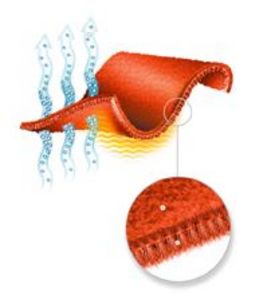
Outside everything is your wind protection. Leather is the most popular material choice for motorcyclists, because it offers great wind and abrasion resistance and looks very sharp. However, it has limited waterproof properties, has special maintenance needs, and is very heavy. Those of you (I think as many as 15 or 20) who read my "In the Bag" article may remember how I extol the virtues of Cordura nylon. This tough, light synthetic fabric is in some ways as strong and abrasion resistant as leather, but is also washable and can be soaked with water and dried out again repeatedly with no ill effects. Try that with leather and it will eventually lose its abrasion and wind-resistant qualities.
It's not enough for a fabric to just be waterproof.
Those of you unfortunate enough to wear a military-issue rain poncho in a military-issue rain storm know that after a few minutes you're just as damp underneath the poncho as you would be outside it. This is because the humid air and vaporized sweat have nowhere to go and just collect under the poncho, which is waterproof on both sides. Fortunately, Cordura can be bonded to a layer of Gore-Tex or some other semi-permeable material, which allows the smaller vaporized water droplets out of the fabric without allowing the larger raindrops through from the outside, keeping moisture from collecting inside your clothing and making you miserable.

More by Gabe Ets-Hokin








Comments
Join the conversation