
You have a car, don't you? It's okay, I have a car too. So why, oh why would anybody ride in the rain? Are they stupid? Do they have a screw loose?
You'd think that American Motorcyclists were water-soluble, the way they avoid rain riding. As soon as there's any hint or chance of rain, the motorcycles disappear like they've been vacuumed up by God's own Electrolux. I have a theory as to why this is.
As I've touched on in previous articles, [Manifestos I and II] we American bikers mostly regard our motorcycles as toys, recreational lifestyle accessories that we use when everything else in our lives -- kids, family, work, house, golf, etc.--are attended to and under control. This means motorcycling is a leisure time activity, a fun pastime for when the weather is perfect and there's nothing else to do. They are "transportainment", not transportation. 
Because of this, American motorcyclists ride their motorcycles a very short distance every year: 1,200 miles on average, according to the US Department of Transportation. Few of those miles are spent in the rain, so we can safely assume that the average motorcyclist in this country has little experience operating his motorcycle in or dressing for the rain, cold, or other adverse conditions.
Of course not every motorcyclist in this country is like this. Our brethren in the Pacific Northwest, for instance, can mostly ride year round, but only if they adapt to and enjoy riding in the rain, as it can rain almost any time up there. Because of this, Seattle riders rarely complain about getting wet, and roadracing organizations in the Pacific Northwest don't cancel races due to rain.
American motorcyclists ride their motorcycles a very short distance every year: 1,200 miles on average

However, most of us shy away from rain riding, and when we are caught in a shower, we are ill-equipped, with little raingear and fewer skills to utilize to keep us from falling down or just being miserable in the downpour, so we confine our riding for those perfect but occasional days when there is no chance of cold or rain.
Luckily, you're a MO subscriber, so in the interest of public service and generous tax deductions we present you with a three-part series on everything we know about rain riding. In the first part, we will talk about the gear the rider should be wearing in the rain, as well as some information about dressing for cold weather.
Theories of Cold-Weather Clothing
Riding unprotected from the elements for an extended period of time isn't just uncomfortable; it's dangerous. Water is a very efficient cooling medium; that's why car and motorcycle engines with liquid cooling are more efficient and powerful than air-cooled designs.Our bodies keep warm by circulating warmed blood from our hearts throughout our bodies. If it's too cold outside to keep everything warm, the body reacts by constricting arteries and capillaries, reducing blood flow to your fingers, toes, ears, and other end pieces. It also starts to slow down your heart rate and breathing, leading to a loss of alertness. Shivering, loss of vision, impaired judgment, fatigue and other unpleasant effects kick in after that.
I can think of many activities that are fun to do nude or partially clothed, including swimming, deep frying, or writing this story. Motorcycling, however, isn't one of those activities. Mutant Seattleites aside, the human body seems to have been designed to be most comfortable in a warm, dry climate, but not on a motorcycle moving rapidly through cool, damp air. Water is a very efficient cooling medium; that's why car and motorcycle engines with liquid cooling are more efficient and powerful than air-cooled designs. "Wind chill" -- the amount wind reduces the perceived temperature on exposed skin -- is another factor adding to cold: if the thermometer on the bank sign reads 45 degrees F, and you're going 40 mph, the effect of the wind will be to make the temperature feel like 34 degrees on your exposed skin.
Intuitively, we know all this, and yet, many of us don't have motorcycle-specific clothing to protect us from cold and wet weather. Winter sports like skiing, sledding, or ice-fishing are popular, despite cold and wet. Can you imagine if we only skied when it was warm enough to wear shorts? I won't tell you motorcycling in the rain is as fun as it is on dry, warm days, but it's a lot better than you'd think if you're dressed for it.
Can you imagine if we only skied when it was warm enough to wear shorts?Basically, to keep warm, you need to hold multiple layers of warm, dry air close to your skin. To do this, you will need three kinds of layering: a moisture-wicking layer directly against your body, a single or multiple layers of insulation, and an outer layer of wind-blocking and waterproof material to hold it all together. Extreme cold weather clothing must be a system; any one of these layers alone is insufficient to keep you warm and dry for any length of time.
The first layer, that moisture-wicking one, is very important. Materials like cotton or poly-cotton blends are really no good, especially if you are sweating. These fibers absorb and trap moisture, holding the damp against you. The water acts as an efficient cooling medium, and can even freeze if it's cold enough. A moisture wicking fabric, like polypropylene or wool doesn't absorb moisture and pulls the water away from your skin where it can evaporate.
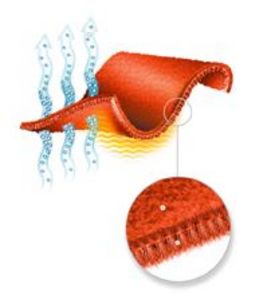
The second layer, the insulator, uses lots of thick, fluffy fibers to trap warm air close to your body. Synthetic polyester fleece, Dacron, down feathers and wool are widely used, but cardboard or newspaper will also work in an emergency. Fleece is great because it is light, absorbs almost no water, and has a huge number of fibers, so you get lots of trapped air with less weight than wool and less bulk than a puffy down jacket.
Outside everything is your wind protection. Leather is the most popular material choice for motorcyclists, because it offers great wind and abrasion resistance and looks very sharp. However, it has limited waterproof properties, has special maintenance needs, and is very heavy. Those of you (I think as many as 15 or 20) who read my "In the Bag" article may remember how I extol the virtues of Cordura nylon. This tough, light synthetic fabric is in some ways as strong and abrasion resistant as leather, but is also washable and can be soaked with water and dried out again repeatedly with no ill effects. Try that with leather and it will eventually lose its abrasion and wind-resistant qualities.
It's not enough for a fabric to just be waterproof.
Those of you unfortunate enough to wear a military-issue rain poncho in a military-issue rain storm know that after a few minutes you're just as damp underneath the poncho as you would be outside it. This is because the humid air and vaporized sweat have nowhere to go and just collect under the poncho, which is waterproof on both sides. Fortunately, Cordura can be bonded to a layer of Gore-Tex or some other semi-permeable material, which allows the smaller vaporized water droplets out of the fabric without allowing the larger raindrops through from the outside, keeping moisture from collecting inside your clothing and making you miserable..jpg)

Page 2
Weatherproofing Your Weatherproofing
The most common complaint I've heard about the most excellent Aerostich Roadcrafter riding suit is that it only seems to be waterproof for a little while. After about twenty minutes in a hard rain, water pools in the crotch and leaks through the seams and zipper fabric, giving the rider the appearance of a pants-wetter. This can be an issue for those of us in the customer service industry, as urine-stained pants are not very prestigious in our culture.
Although Andy Goldfine, president of Aerostich, rarely sees his customers face-to-face, he still dislikes having a wet crotch.
When I complained about the lack of waterproofing, he sent me a few of his favorite products to help keep me dry. The Nikwax Tech Wash Liquid Soap ($8), is an incredible non-detergent soap that was actually able to make a dent in some of the toughest stains of my dirty, six year old Roadcrafter suit. It not only is safe for all outdoor fabrics like Cordura nylon, it also preps it for waterproofing treatments. My old `Stich looked much cleaner than it had when I washed it in normal detergent, and was even cleaner than when I sent it back to Aerostich for a professional cleaning and repair. When I complained about the lack of waterproofing, he sent me a few of his favorite products to help keep me dry.The Nikwax TX Direct Wash-in Repellent ($10) is pricey, but works incredibly well. Two containers are recommended for a Roadcrafter suit, but once washed into the fabric, the suit feels incredibly slick, like a rubber raincoat. Water beads up and rolls off every part of the suit, including zippers, but retains the breathe-ability that makes it bearable in warmer weather. It also will work on all kinds of breathable and waterproof clothing.
The Aerostich Waterwerks Kit ($14) includes a tube of McNett Seam Grip and a special curved syringe applicator. This is a special Urethane cement designed to repair rips and tears in waterproof fabrics. Andy recommends spreading it along the Roadcrafter's zippers and exposed seams to keep rain from getting in. The curved syringe aids this. Also included is a big can of 3M Scotchguard. If you plan to spray this stuff in an enclosed space like your garage or basement, be sure to wear your helmet so that when you pass out from the fumes you won't injure your head. -- Pete Brissette
What to Wear:
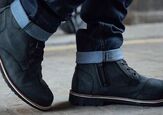
If you like your feet, you'll pay particular attention to this part. It goes without saying you should wear a pair of sturdy, waterproof boots. Motorcycle specific boots are best, of course, although I've enjoyed my pair of Danner "Recon" combat boots for the last three years. They might not be the best thing to wear in a crash -- although the double seams and tough leather make me think they'll be better than some of the shoddy "motorcycle" boots I've seen from some manufacturers -- but they are incredibly warm and waterproof. After three years of almost daily use, I can stand in a puddle and expect my socks to remain dry. Good quality, truly waterproof boots are a must, and the same principles of cold-weather clothing apply to your boots. Wicking sock liners, insulated socks or a built-in thermal liner in the boots, and a windproof, waterproof and abrasion-resistant outer shell to hold it all together will make your ride much more pleasant for your footsies.
Of course, there's always those times when you can't plan for rain, so a bit of improvising may come in handy if you're not wearing your waterproof boots. I've had very good results with a pair of plastic grocery bags tied securely over my feet. Get them as tight as you can so they don't flap too much, and keep them away from hot exhaust! If you don't put your feet down on the ground too much you should be able to make it home with your feet dry, if not warm.
For those of us with a bit more forethought, we can pack some boot covers somewhere in our bike. Aerostich has come up with a slick solution with their Emergency Boot Raincovers ($57), which are pretty easy to put on, are very well-made, and fold up very neatly into their own toes to make a hamburger patty-sized package which should fit under your seat until you need it. 
We all have a pair of old rainpants lying around. Are yours good enough for the kind of riding you will do? They should be roomy enough to get on and off easily over your regular riding gear (do they fit over the armor and kneepucks of your leathers?) and have stirrups or some kind of gathering at the bottom to make sure they don't flap around. Once again, non-breathable fabric will make you colder, as the moisture condenses inside your clothing, holding cold, damp fabric against your skin.
Your torso is the most important area to protect from cold and wet. This is where all your important organs reside, close to your heart and all that warm blood. Why the brain isn't in there too is beyond me. Intelligent Design indeed!
As long as your heart has warmed blood to spare, it will keep your extremities warm, but as soon as you start running short, it will go into survival mode and reduce blood pressure, keeping warm blood close to the heart, lungs and other essential organs. This is why you should very seriously consider an electric vest if you make trips of longer than 20 minutes in temperatures lower than 55 degrees F. The vest constantly replenishes body heat, allowing your body to spare plenty of warm blood for your head, neck, arms, legs, fingers and toes. This means you need much less bulky gear like gloves and can ride for much longer, at a higher level of alertness.Vests come in lots of styles and can have a plethora of features. I recommend a heated collar and an adjustable rheostat at a minimum. Stay tuned for a comprehensive review of electric vests from the crew here at MO.
When it comes to your jacket and helmet, one thing often overlooked is visibility. Even on the best and brightest of days, we are very small and hard to see compared to the lumbering behemoths we share the road with. Add dark, rain and fogged-up windshields, and a pedestrian, bicyclist, or guy on a motorcycle is pretty much invisible. Your rain gear should have some kind of reflective material on it, and your helmet, which is the highest and most noticeable feature of a motorcyclist, should be brightly-colored or have some kind of reflective sticker or strip on it. If you're like most riders and have a black or multi-colored race replica helmet (race-replica paint schemes tend to work like a soldier's camouflage and can be very hard to see at most distances), there are some cheap and easy-to-apply items available to add visibility. One is the Halo helmet band, a neoprene strip that clings to the bottom of your helmet and is covered with a hyper-reflective material visible at hundreds of yards away.
Another nice product is the ArrowHead, a sticker kit that not only lights up when illuminated from behind, but which also indicates which direction your head is turning to supplement your turn signals.
In states with no helmet laws, more than half the riders go without helmets, so it should be no surprise most of the riders disappear as soon as the temperature drops. Your head is your body's radiator, where thousands of capillaries close to the surface of your skin release all those precious calories to the atmosphere. Going helmetless -- or wearing a half or open-faced -- will keep you feeling very cold, even if you think you look cool. A good quality full-face helmet makes a huge difference in keeping warm; cheap helmets are drafty affairs with ill-sealing vents and visors. Wear a full-face helmet if you like staying warm.
Sealed up like that you will encounter the main enemy of a well-dressed rain raider: fogging! You
can try breathing down over your lower lip, plugging you nose, or holding your breath, but your face shield, untreated, is going to fog up something awful when it's wet and rainy outside. You can keep your shield cracked open a bit, but then rain trickles into the inside of the visor and really interferes with your vision. There are lots of solutions for fogging on the market, but the only one I'm really happy with is Modern World Venture's Fog City Shield ($17.95). It's a plastic insert that sticks inside your face shield and won't fog up. You can hold it over a steaming teakettle, breathe right on it, and it just won't fog. It has a few disadvantages: it scratches easily and gives you a little double vision at night if you don't install it very carefully. The adhesive used to not be so good, but Fog City improved it and it lasts all season now.
This product is well worth the price, especially when you pass your friends while riding in the rain or heavy fog because they can't see. We slow guys need every break we can get.
There are those of you out there with eyeglasses, and I feel for you, really. I don't know of any substance that works as well as the Fog City Shield to treat your glasses, but you can try any one of the commercially available anti-fogging products, and you probably already have. Good luck to you.
Other than boots, gloves are also a make-or-break thing for happy rain riding. After 18 years of riding in the rain, I still haven't found a rain glove I'm 100% happy with. A glove should be thin enough to give you a good feel for your controls and not restrict your movement, but should also be insulated, armored and waterproof. It's a tall order for glove makers to meet. One feature I will want in my next rain glove will be a compact gauntlet, so I can put the sleeve of my riding garment over, not under the glove. Rain runs down your arm in a heavy rain and will soak your gauntlets, letting water into your gloves if they are outside the sleeves.
If you have ventured afar without your rain gloves, Aerostich once again steps up here to provide a solution with the Triple Digit Rain Covers ($47). These are nicely-made, breathable nylon glove covers with just three digits per hand. Your thumb is one, your pinkie and ring finger are another, and your middle finger and index finger join forces for the third. The design, according to Andy Goldfine, will keep your fingers warmer without compromising control. I didn't like them as much as Andy does, as I rest a single finger on the brake and clutch levers when I ride and found them uncomfortable because of this. It's also impossible to flip the bird at errant drivers, something I do more than I should, as I travel unarmed. Andy told me I'd get used to it, but I don't want to, Andy. Please don't make me. Also, a guy on a Kawasaki Vulcan thought I was making fun of him and punched me after I waved to him wearing the rain covers. 
If you don't mind looking like a Disney character, these are a very good thing to have with you in emergencies. They fold up very small and have the best drawstring design ever: the gauntlet cinches tight or releases easily with one gloved hand. They breathe and keep your hands warm and dry in the rain. They are difficult to pull on at first, but like an Aerostich, they get easier to don with practice, and even come with a user's guide. For $47, they ought to!
I've now dressed you head to toe and even tied a string to your mittens so you won't lose them. You should be warm and snug and ready to go play in the cold. Go out and ride your bike if you feel up to it. If you don't, watch this space, because I'm going to cover prepping and equipping your motorcycle for rain riding next, and after that, I'll give you some tips from some expert and not-so-expert rain riders to keep you upright and grinning no matter how nasty it gets.