MSF Advanced Rider Course

story by Jed Grant, Created Jan. 18, 2006
BACK TO THE ARTICLE PRINT
Learning what you already know


Although I have often considered taking the advanced rider course from the Motorcycle Safety Foundation, I needed to be ordered to take it to finally make the decision. You see, I was called to Active Duty by the National Guard in May and in order to ride my pride and joy on the post the General said I had to take the MSF course. Being a Captain, I decided to take the course rather than risk being caught by an eager 18 year-old private with a gun and a shiny, new MP badge, salivating at the thought of catching an officer riding an unregistered bike on post. Our MPs here are more crusty than usual - I often wonder which General's daughter these MPs must have impregnated to be assigned to the gate at Ft. Irwin, only a few miles from Death Valley.
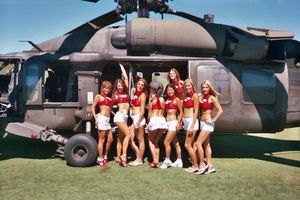
Yes, we do have an opening for a flight attendant! Since I already have a motorcycle endorsement on my driver's license, The Man allowed me to take the four hour advanced course. For those without an endorsement, the Basic RiderCourse is required and lasts two and a half days. When I signed up for the course I was given a checklist for the bike inspection that would occur before the class. Being on an Army post and knowing that these sorts of classes are often taught by retired or current non-commissioned officers that inspect things for a living, I was pretty nervous about the inspection. I went over the bike several times and even gave it a good scrub-down the morning before the class. Uncle Sam was good enough to give me the afternoon off for the class and I arrived a few minutes early. I was relieved to meet the instructors, a friendly couple and one of their friends. The inspection was not bad and was more along the lines of what I always do before I ride; like a quick check over the bike. Apparently, some people do not preflight their rides. I guess I was expecting something more like a trackday inspection but it was not at that level. They required gloves, helmet, glasses or face shield, long sleeve shirt and pants, and over-the-ankle boots. I wore my usual riding gear and wish I would have worn the minimum as I roasted the whole time (more on this later).

I went over the bike several times and even gave it a good scrub-down the morning before the class.
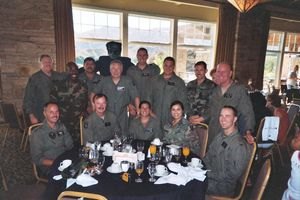
The guy in the back got the anthrax vaccinations. There were seven other students ranging in age from their early 20's through early 50's. The bikes were as varied as the riders, including a little Suzuki thumper dual sport, a beautiful , 800 pound, chromed-out Harley with the widest beach bars I have ever seen, a brand new Hayabusa, and a race-prepped GSXR 1000 on super soft DOT race tires, to list a few. Everyone was friendly and we enjoyed pleasant conversation while we filled out all the forms promising not to sue anyone if we high side at 10mph. The class began with introductions and parking instructions, along with explanations of a few hand signals used to indicate "park now, stop, go that way, go this way", and the like.

The first period of instruction was an explanation of why I roasted. It is inherently more difficult to control a motorcycle at low speed according to the MSF, therefore you will never exceed 25mph for the whole course. Heck, most of it is less than 10mph. This would be fine in appropriate clothing but I was wearing an armored jacket and pants, with Sidi boots, and the Gixxer dude had his leather jacket and race boots. We were cooking while the posers in the beanie helmets and t-shirts were feeling good. My biggest gripe with the course is that it seems to be some sort of low speed trials event. 
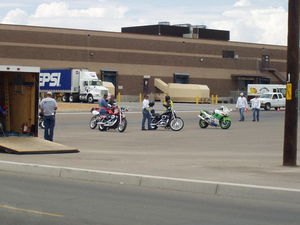
Just before the pre-ride inspection for the advanced rider course. The first exercise is to stop-and-go without putting your feet down (just in case you hadn't done that five times on your way to the class), then accelerate to the next line, and slow to a near stop. Then you progress through a slow roll between two lines using the clutch to keep moving at 1-2 mph without crossing the lines, using the brakes, or putting your foot down. After this we turned and weaved through several sets of cool little motorcycle cones. The slow roll could be compared to moving slowly through traffic to a stop sign, although I wondered anyone would wait in line and not split the lane (Not everyone can live in Cali, Jed.--Ed.) The cones were fun and I really enjoyed them as I could get a little air flowing through my clothes. They were an excellent exercise in looking where you want to go and avoiding target fixation. The instructors did a great job of teaching us to look up, ahead of the current cone to the next one in line. This has direct application to riding safely on the street for obstacle avoidance and is probably the most important thing taught in the MSF course. Everyone knows you go where you look, and this is a good way of teaching and reinforcing that concept.

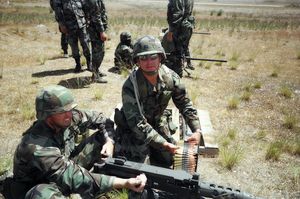
Captain Dan Anderson, my assistant gunner and a fine pilot. The next exercise was learning to U-turn in as short a space as possible while counterbalancing the motorcycle and keeping your feet up on the pegs. Anyone who has ever ridden a dirt bike knows all about this, but it was totally ridiculous trying to do it on a street bike with limited steering lock and gearing good for 70mph in 1st. I can not think of any rational correlation to this exercise and       riding safely on the street. The poor Harley dude was hitting the beach bars on his legs, with his ass 3/4 off the bike with his head turned almost completely over his shoulder, trying to turn that thing around in a 20 foot box, floorboards grinding away. I hope to heaven that the General was not watching us do this stupid exercise because almost none of us could do it and it looked ridiculous as heck. The funny thing was, we asked the instructor to do it and it took her three tries on the little DR before she could do it, which made us all feel better. I had a daydream of taking that little thumper, burning a big donut and doing a wheelie out of the box down the street... the heat was getting to me. We took a break and chugged some Gatorade, wondering how a place as windy as the Mojave Desert could be completely calm and windless as the sun baked us incessantly.

After our hydration, we had some instruction and headed out for the next exercise. This time we were to accelerate to 25mph, shift into second, and stop as quickly as possible between two lines while downshifting into first. The problem is that by shifting into second you are lugging along and pretty much need to idle just to keep the bike under 25mph. Panic stops are fun, but stoppies were definitely discouraged (ahem, sorry). Good information was discussed about using the front brake for most of the braking power, and using the back to settle the chassis. After we could demonstrate adequate controlled stops, they threw in a "stop when we wave" as opposed to stop between the lines. If they would have left out the stupid requirement to shift, this would have been a useful exercise. However, everyone I know has at least tried panic stops, whether from necessity or practice, so I am not sure why I needed someone to watch me do it.



Page 2Here I think the MSF is making the biggest mistake of all with the course.

Our next trial consisted of trying to stop while turning. Here I think the MSF is making the biggest mistake of all with the course. We ran through the turns at 15-20 mph a few times to get familiar with the layout, then had to come in to the turn, initiate lean in, then stand the bike up and stop. They did not want us to brake while leaned in the least, and encouraged us to run outside the lines that marked the borders. Why you would want to teach someone to stand the bike up and run it off the road to try and stop is beyond my understanding.

Perhaps they are thinking there will be a large tree, guard rail, or SUV that you will stop against proving that theThis is why I fly. They put 12 GI Joes in the back of this thing! Its hot, cramped and dusty.ir way is the fastest way to stop. They also mentioned to Racer Dude and me to quit using one or two fingers to stop; "that was a four finger exercise". At that point I was thinking of doing something else with a certain finger. They added that we should not cover the brake with our fingers either, because if we panic we might grab the brake and lock the front wheel. Racer Dude and I looked at each other knowing that this was BS, but we acquiesced. I just kept doing what I was doing and I assume he did too. At least they didn't mention it again, and truthfully they were pretty cool about the whole thing. I do wish they would try to teach students to not leave the clean surface of the road and how to brake while leaned; once you leave the road you are at the mercy of the laws of physics.

The next event was basically how to apply the throttle through a changing radius turn. We had a short run up to 25mph or so including the dreaded shift to second, slowed for the turn and down shift, looked for the line we wanted, reach the apex, turn in, and applied smooth throttle to exit the turn. They had an excellent set up for this with a turn that started gradually and tightened so the "look where you want to go" thing was really reinforced. There was even some discussion about the proper line through the corner. I breathed a sigh of relief; finally something more up my alley.  I occasionally ride with guys in the canyons and I'm always surprised when it appears as though they are looking about two feet in front of them and not using a line that sets them up for the next corner. Almost without fail when I lead they will ask how often I ride the road we are on, thinking I must have some special knowledge of where it's going to go next because I always seem to know and rarely use the brake.

With our spouses at Tenaya lake, above Yosemite. Well, let's just say that testosterone was not left at home and this quickly turned into a 30mph GP race with Racer Dude pulling away like Rossi and me trying to keep up.

Often I have been on the road before, but that has nothing to do with it; I am just looking further ahead than they are and using a line that gives me a good set up for the next corner, and maximizes corner speed (versus crawling through the corner and blasting WFO to the next one, then dropping the anchors trying to stop without crossing the yellow line of death, or worse). I try not to ride with people that cross the line, both figuratively and literally. There is nothing to prove on the street. At any rate, the exercise was very useful and they made a point of illustrating that the safest line through the corner is also often the fastest. Racer Dude was using some serious lean angle and could have easily put a knee down at 25mph. We took a break again and I asked him about the shifting thing. He said he never left first all day, and didn't intend to start because the bike was geared taller to help prevent wheelies on starts, estimating it was good for 100mph in first.

The final test was really fun; a giant figure eight with us broken into groups of three. Racer Dude, the guy with the brand new Hayabusa and I were the first up, with a stern warning not to exceed 25mph and to exercise caution at the crossing. This was supposed to put all of the elements together and give us the feeling of being on the road with other riders, with an intersection thrown in to the mix. Well, let's just say that testosterone was not left at home and this quickly turned into a 30mph GP race with Racer Dude pulling away like Rossi and me trying to keep up. His smoothness and experience was really apparent, and soon we had lapped 'Busa man, who was doing really well considering it was a relatively unfamiliar bike to him and his remaining 59 payments. We pulled in and there was some discussion of smoothness and how we were going quickly but completely in control and safe, looking ahead when crossing and slowing when needed. They also pointed out that the only time they saw brake lights on Racer Dude was at the crossing, which might have been too aggressive for the street in their opinion. I thought it rocked. Another issue they pointed out was that all of us were riding our own pace, not trying to keep up with the fast guy. (Sort of true I guess.) I really wanted to keep up with him to learn from him. Riding with a guy who is just a little faster is often a wonderful way to learn little things that make a big difference.

The last event of the day was the beer goggles and a discussion about riding and alcohol. I have seen several of my Army buddies with beer goggles do some amazing things, but these are the absolute ticket! This special pair of goggles give you the equivalent of .10 blood alcohol: talk about an instant buzz! You have to try to perform a few simple tasks such as walking a line, touching finger to nose and other roadside bits I am sure you MOrons are familiar with from prior experience. The amazing thing was some of the guys could walk and do several of the tasks pretty closely to normal. Lots of experience I guess. I offered to take the goggles to the Officer's Club to see if they could make all the toothless cAnd you thought you had a big gun! rackheads around here look good just like the beer goggles I am used to but I was denied. No one was allowed to ride with them on but I'm sure it would have resulted in injury. It is just amazing, when they review the statistics from motorcycle accidents, that quite often the rider was under the influence of alcohol. How anyone could attempt to ride while intoxicated is puzzling, unless they are hoping to die. The take home message was easily understood by all: "One is too many if you are riding."

Certainly, I already knew a lot of what was taught, but like anything else there is always more to learn and practice never makes you worse.

Me and my ride with the graduation present on the fork. As we parted ways with our new MSF Experienced RiderCourse graduate cards I wondered if your precious tax dollars were well spent educating me. Certainly, I already knew a lot of what was taught, but like anything else there is always more to learn and practice never makes you worse. I know that the U.S. Army (actually, all of the Department of Defense, I think) is requiring this course with the intent of really trying to keep young soldiers from dying needlessly, and for that I am grateful. I would not hesitate to take it again on your dime so I could ride on post, but if I had to shell out my hard earned greenbacks I would pass. From a civilian perspective, if you have been riding less than a few years, or only ride a little bit per year, or are just not very sure of yourself on the road, it would be a very good investment. If you are an avid motorcyclist with lots of experience on and off road, don't waste your money. A track day would be more appropriate and you would learn way more.

In March, a soldier recently returned from a tour in Iraq, bought a "hyper bike" (whatever that is) and was killed three days later in a single vehicle accident involving excessive speed. I don't know if he had much prior motorcycling experience, but if one such tragedy could be prevented, then certainly your money is well spent.

copyright (c) 2009 Verticalscope Inc. Story from http://www.motorcycle.com/how-to/msf-advanced-rider-course-3411.html