

Come Forth, Lazarus!
1976 Honda CB550F Supersport: Turning a Sow's Ear into a Different, More Expensive Sow's Ear
Jesus, once more deeply moved, came to the tomb. It was a cave with a stone laid across the entrance. "Take away the stone," he said.
"But, Lord," said Martha, the sister of the dead man, "by this time there is a bad odor, for he has been there four days."
Then Jesus said, "Did I not tell you that if you believed, you would see the glory of God?"
So they took away the stone. Then Jesus looked up and said, "Father, I thank you that you have heard me. I knew that you always hear me, but I said this for the benefit of the people standing here, that they may believe that you sent me."
When he had said this, Jesus called in a loud voice, "Lazarus, come out!" The dead man came out, his hands and feet wrapped with strips of linen, and a cloth around his face.
Jesus said to them, "Take off the grave clothes and
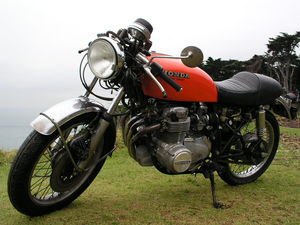
Look at this heap. What was I thinking? Well, I figured every motojournalist needed a vintage bike project to occupy his garage.
I had a stupid, romantic image of myself on a snarling, barely-tamed vintage bike, held together by baling wire, electrical tape and sheer guts.
I would be in touch with every nut and bolt on the thing, building a bond with it like the Lone Ranger and Silver.The trouble began when I saw an ad on Craig's List for a 1976 Honda CB550 SuperSport. The ad described the bike as running, but needing work. It was set up as a Café racer, with clip-on handlebars and a cool solo seat. In the picture, it looked OK.
Craig's List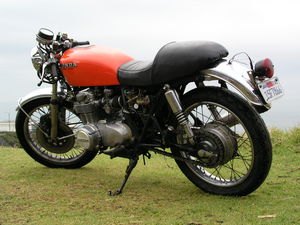
Craig's List was founded in 1995 by Craig Newmark, a computer programmer in San Francisco, Calif. He originally started it as an events-related bulletin board, but it expanded to include job listings, apartment vacancies and classified ads for cars and motorcycles. More recently, Craig's List has expanded to almost every major city on Earth, with millions and millions of people looking at it every day. A feature-length documentary, http://www.24hoursoncraigslist.com/ will be in theatres soon, further boosting the popularity of this global site.
The "motorcycles and scooters" for sale listing is an amazing thing, with far more bikes listed for sale by private sellers than any other classified ad site I've seen. (Cycletrader has tens of thousands of ads, but the great majority of them are dealerships advertising new bikes.) You can find many terrific bargains in there, and I've bought many bikes there in near-perfect condition for well below Kelly Blue Book Value.

Posting ads is very simple. The old-fashioned, HTML-only site loads quickly and is easy to navigate. You just type text into the proper boxes, upload any photos, and your ad posts in minutes. There are no ads, banners or pop-ups to slow things down. The ad stays up for 10 days and is then deleted automatically.
It's not all a dream-come-true. Like any other public space, there are criminals and hustlers waiting to take advantage of the unwary. When you see a motorcycle or scooter priced so low that it's too good to be true, it usually is. An emailed inquiry to one of these ads will produce a response in badly written English informing the buyer that the motorcycle is in another country and will be airfreighted as soon as half the money is either sent to the seller Western Union or placed in an escrow account. I don't know how they get the money from the escrow account, but I do know you'll never get the bike or your money back. Scams exist to take advantage of sellers, too: fake cashier's checks in amounts exceeding the bike's sale price are sent with instructions to cash them and wire the change to someplace. The check bounces 30 days later, leaving the unfortunate (and not-so-bright, in my opinion) seller liable to the bank where she cashed it.
The bottom line is to be sure and inspect a bike in person before you commit any money and don't be afraid to walk away from a deal, no matter how sweet it is. With millions of readers and thousands of ads, something else will pop up soon.
Some sellers aren't scam artists, but they do grossly misrepresent or overprice their motorcycles. Here's news for you if you're selling your motorcycle: "Like New" or "Perfect" means absolutely flawless, as-new condition. A bike with the original tires and 4,500 miles is neither perfect nor like new. It's going to need new tires, and the chain is at least 25% worn. And no motorcycle makes it that far without at least one little scratch somewhere. Here's another tip: the Kelly Blue Book retail price represents what a dealer would sell that bike for in a showroom, with a limited warranty, an implied guarantee of clear title and lemon-law and other rules and regulations protecting a prospective buyer. A private seller offers none of this. So why do so many Craig's List sellers add 20-40% to Kelly retail when they price their bikes? Who knows? Ig nore the price they ask: most sellers will come down to a reasonable price once they realize they are dealing with a serious buyer.The bottom line is to be sure and inspect a bike in person before you commit any money and don't be afraid to walk away from a deal, no matter how sweet it is. With millions of readers and thousands of ads, something else will pop up soon.
The bike was a couple of hundred miles away, near Yosemite. The owner has willing to bring it down to my house in San Francisco, and after negotiating a price I felt was more reasonable for a dodgy, 30 year-old bike that needed lots of work, he told me he was on his way.
Six hours later a car and trailer pulled up in front of my house. On the back of the trailer was a pretty sad-looking motorcycle. Both side covers were missing, most of the wiring harness was coiled up uselessly next to the headlamp, the turn signals and horn were missing, the headlamp brackets were non-original, the speedometer was gone, and the whole bike was coated in grime and grease. Also, there was a dent on what looked like a repainted gas tank and the starter button was broken. I may have only shelled out $400, but I was starting to think the seller should be paying me for disposal.
I tried to look on the bright side: it's not everyday you can get a running motorcycle for $400, right? So I straddled the bike, and with the seller directing me, kick-started it for my test ride. It fired up, filling my street with a distinctive CB sound coming from the Supertrapp exhaust.I may have only shelled out $400, but I was starting to think the seller should be paying me for disposal.
OK, maybe this will be OK, I thought as I kicked it into gear and let out the clutch. The bike pulled away smoothly, with a nice hit in the midrange and no bad stumbling. The frame and forks seemed straight; better still. All the gears worked smoothly, and the brakes...well, they were brakes. After a four-block test ride, I felt good enough to know the bike was basically sound, even if it looked like it had been living in a small apartment in Hong Kong with William S. Burroughs for the last 15 years.
Money changed hands, a cardboard box of mostly useless spare parts went into my garage next to the other boxes of mostly useless spare parts, and I was once again a Honda owner. The next day, I gave my new bike a good cleaning so I could start to inventory what it would need to make it an acceptable member of the motorcycle community once more.

More by Gabe Ets-Hokin





















Comments
Join the conversation