
That actually worked out pretty well for me. Back in the late 80's, when I bought my first bike, there was a massive glut of cheap, reliable used motorcycles, the result of Honda and Yamaha's battle for market share in the late 70's and early 80's. I bought a 5 year old Yamaha XS650 from a dealer for the whopping sum of $999. It had 1200 miles on it and ran perfectly for as long as I had it, even though it was heavy and buzzy and a nightmare to tour on.
I knew they had two wheels and that they were different from cars, but I didn't know anybody who knew a thing about them. So what did I do? I bought the first one I saw.
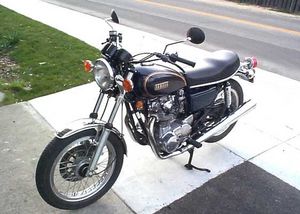
But things are different know! New unit sales are less than what they were in the early 80's, so the pool of used bikes is smaller than it once was. Those cheap 70's and 80's UJM's (Universal Japanese Motorcycles) are now rusting away in landfill and salvage yards across the country, or taking up room wedged in between broken playpens and rusty weed whackers in a million suburban garages. Even when they have low mileage (and they usually do), resurrecting a 20 or 30 year old motorcycle is beyond the scope of most beginning rider's mechanical abilities and resources.
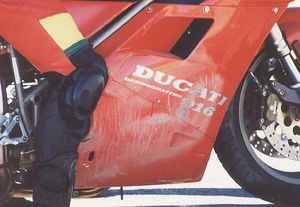
Because of a changed market and the aging of the motorcycle consumer, there are also fewer small displacement bikes out there for novice riders. New dealers generally push 600cc supersport machines or big, heavy cruisers on first-timers as their first bikes, with the predictable side effect of a large pool of abused, crashed 600cc sport bikes and scuffed-up, low mileage cruisers out there waiting for unwary buyers.
I want to give you the tools you need to decide what kind of bike to buy, how to find the best bike, how to get the best price, and how to make sure you don't get ripped off.
I've worked professionally in "Powersports" for over three years and have personally bought about 50 motorcycles. I've sold over 300. I've seen people make a lot of mistakes, and I've made a lot of mistakes myself. With that perspective, I'm going to try to keep you from making some of those errors and convert you into a successful, happy motorcyclist, in it for the long haul.
Step One: Can I Ride a Motorcycle? 
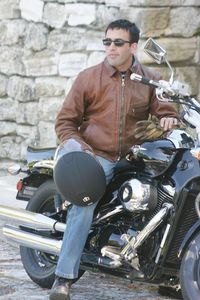
It's a condescending question, sure, but can you? Motorcycling is a skill that requires a certain basic level of coordination, balance and reflexes. If you can't learn to ride a bicycle, or you can't drive a car, please reconsider. Motorcycling is fun until you crash!
Also, can you legally ride a motorcycle? Check your state's licensing laws. Are you old enough? Can you get a license? Do you have a DUI and a license suspension? Can you deal with wearing a helmet? Do you have medical insurance? Can you afford to insure the bike you want? Will your spouse file for divorce if you show up at home on a motorcycle? There are lots of issues you should consider first. Sure, you can buy the bike first and work them out later, but a little forethought here can save you a lot of trouble! Every salesperson has at least one story about a bike he or she sold and then had to buy back (at a big loss to the customer) because they couldn't keep it for some reason. Don't let that happen to you!
The best place to start is the friendly folks at the Motorcycle Safety Foundation. You can check them out here. They will teach you the basics. Better yet, they will teach you the basics on their bikes and with their helmets, saving you money by letting you scratch their motorcycles instead of yours. That's worth the $200 the class costs right there. You will drop your first bike while you're learning. Oh yes, you will.
Another benefit of the MSF course is that in most states you automatically get your license, with no goofy DMV riding test required. You will also feel confident that you have the minimum skills required to ride from the dealership's parking lot without embarrassing yourself.
Think about it. Would you walk yourself down to the Bell Helicopter dealership, write a check, and try to fly a new helicopter home without knowing how to fly it? I don't think so. So why do people regard a motorcycle any differently? I don't know. But I do know there are lots and lots of stories about the idiot who plunked down $10,000 for the latest, hottest superbike in the store and then crashed it in the parking lot with half the dealership watching. Every dealership has about two a week of these guys (and gals, oh yes indeed!) during the summer. Don't let it be you! Play MotoGP on your PlayStation in the meantime, but learn how to ride before you get the bike. Unless you're buying it from me, in which case you can learn after I get my money. Just kidding. Sort of.

Page 2, Step 2
Step Two: What's the Bike for Me?
Remember that motorcycling is a minimalist experience, so try to keep your list short.
That's the one question motorcycle neophytes ask the most. More accurately, they ask, "What's the best bike?", as if there is one motorcycle universally regarded as the best bike to buy. I then refer them to Soviet-era Russia, where there was only one motorcycle available, in which case the answer was easy.
However, here in the Land of the Free, we are blessed (or cursed) with a ridiculous number of choices. The 2005 Cycle World Motorcycle Buyer's Guide lists over 300 models! And that's just the new stuff. Add in used and you have a dizzying array of bad decisions you can make. 
But don't fret. Picking the right bike for you is as simple as figuring out what kind of features you want (or need). So sit down and write out a list of things you feel the perfect motorcycle should have. Please try to keep the list limited to things that actually exist. Automatic transmissions, cupholders, anti-tailgater lasers and soda machines would add too much expense and complexity to a vehicle. Remember that motorcycling is a minimalist experience, so try to keep your list short.
If I was an 18 year old college student thinking about getting a first bike, I would figure what my average useage would be and jot it down. I might need the bike to get from my swinging bachelor digs to the campus 3 miles away on city streets, and then to get to the train station on the other side of town so I can get home to see my folks on weekends. There's nothing worth seeing for 100 miles around the college town where I live, so I don't need to get on the freeway. I can park a motorcycle on campus for free, but a car costs $6 a day so I can't afford that. The speed limit in town is 45 mph.
Most importantly, I have $2000 to spend, and I won't have much income for maintenance. I don't have a girlfriend, but I'm one of these groovy guys with a guitar and I play in a band sometimes, so you know I'm going to need something that can take a chick on the back.
So here's what my purchase should have:
Be able to go at least 45 - 50 mph; Be very reliable and cheap to maintain; can carry a passenger; have a luggage rack for my guitar; Be inexpensive for an 18 year old to insure; Look cool enough so I can get laid.
Notice what it doesn't need to have:
-160 mph top speed
-cutting edge styling
-Touring luggage capacity
-Full Ohlins racing suspension
-Candy machine
You should consider not just features like price, reliability, performance, etc., but also things like availability, dealer support, and maintenance costs.
A clever guy with a pocket protector could set up a database-style software program that could easily compare features like weight, price, top speed, insurance cost, looks (on a subjective 1-10 scale)etc and match them up to what a buyer wanted. Dating services probably use something like that. But we have to trust our friends, family, internet chat buddies and (shudder) salesmen to help us make the right choice.
So once you know what features you want, you can start looking around in various media to see what's out there that matches your needs and desires. The internet is always a great place to start. There aren't a lot of websites out there with comprehensive databases, but luckily you're a MO subscriber (or should be), so use our search page to look for the motorcycle that interests you. If you live in a large city, your library might keep back issues of motorcycle magazines in their periodicals section. Just ask the librarian to see the periodicals index and look up the make and model you're interested in by year. Keep in mind that most motorcycles are introduced and written about in the year before the year they are introduced.
It's actually much easier than it sounds. Most categories in motorcycling have a few obvious best choices in them. And when I say "best", you should consider not just features like price, reliability, performance, etc., but also things like availability, dealer support, and maintenance costs. The Royal Enfield might be a very good basic standard motorcycle indeed, but there are no California dealers, so if you live in Bakersfield you might want to consider a different bike. The Ducati 999R is a winning sportbike and the fastest thing at a lot of racetracks, but the engine is a high-revving, peaky bundle of nerves, so it might not be the thing for your daily 30 mile commute to the gravel pit.
By this time, you should have an idea of the model you want. You really should have a few different ones in mind. The happiest buyers I've dealt with are the flexible ones. Why are they happy? Because they wind up buying a motorcycle! They don't shop and shop and shop for season after season, looking for something they'll never find. 
I worked in a shop that sold vintage Italian scooters. I could always spot these guys. They were in their 40's or 50's, and they always had a Vespa or Lambretta as teenagers. They would say they were looking for a scooter. I'd ask how long they'd been thinking about buying one, and they would usually say they'd been looking since they sold their last scooter when they were kids! They want another 1956 Lambretta for $150. As soon as they find it they'll get it. Maybe they can be buried with it.
Compile a list of bikes you could live with. Be flexible about color and other features, and then put on your shopping boots, because this is where the hard work starts!
Next: Gabe will talk about looking for a used bike, checking it out mechanically, and negotiating the best price. .jpg)